
I can never resist a loaf that looks bakery-worthy but comes out of my Dutch oven with buttery croissant-style layers. This sourdough croissant bread is the kind of soft, golden centerpiece that disappears fast.
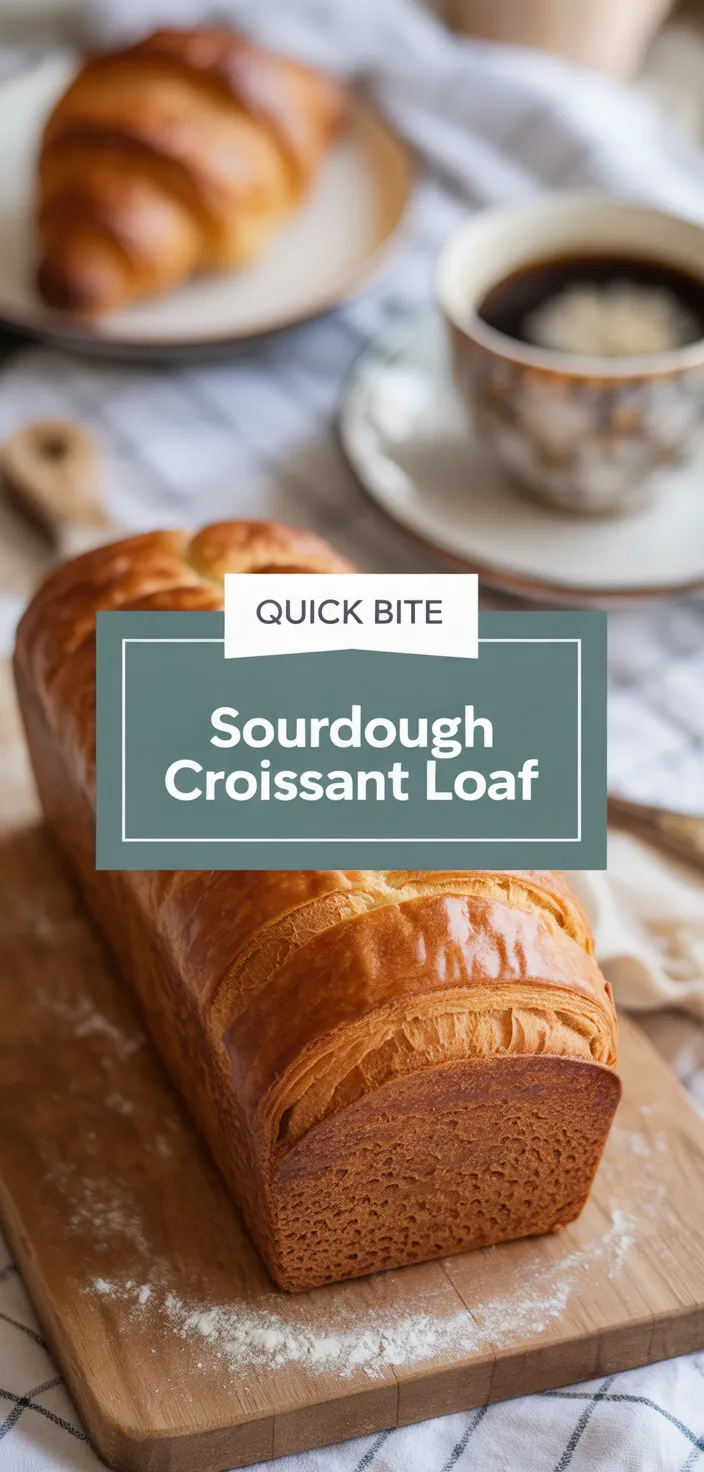
I’m honestly obsessed with this sourdough croissant bread loaf because it gives me all the flaky, buttery drama of a croissant without turning my kitchen into a full pastry project. The crumb is soft, stretchy, and rich, with those little laminated pockets that make each slice feel ridiculous in the best way.
I love how the active sourdough starter brings a gentle tang that cuts through the unsalted butter, so it never tastes flat or heavy. And the Dutch oven gives it that bold bakery-style crust I keep tearing into before it’s even fully cooled.
Buttery. Soft.
Completely worth it.
Ingredients
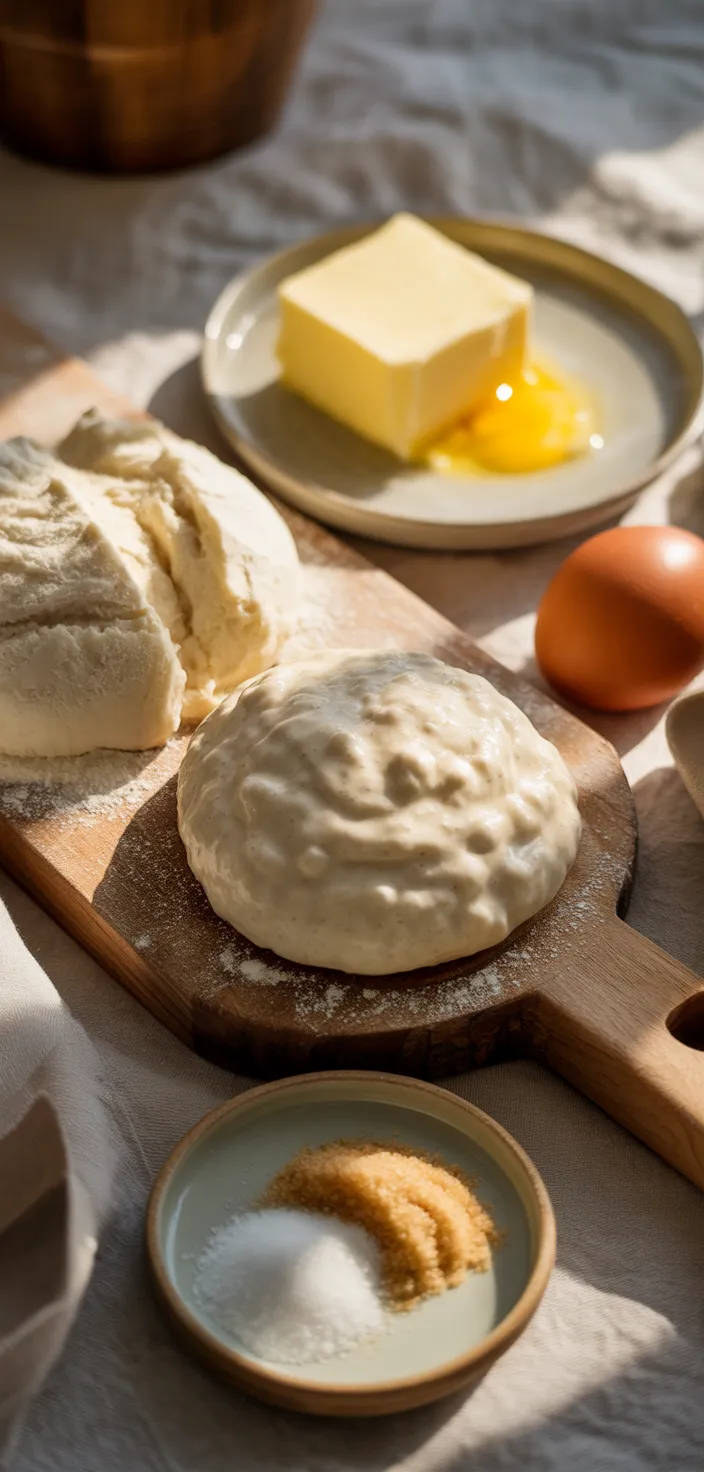
- Bread flour gives the loaf that chewy, bakery-style pull you actually want.
- Active sourdough starter brings tang, depth, and a little wild magic.
- Lukewarm whole milk keeps the crumb soft, rich, and tender.
- Granulated sugar adds gentle sweetness and helps the crust brown nicely.
- Fine sea salt keeps the buttery flavor from tasting flat or dull.
- Softened butter in the dough makes every slice feel plush and cozy.
- Cold butter for laminating creates those flaky, croissant-like layers.
The good stuff.
- Egg wash gives the top that glossy, golden, “I made this” finish.
- Melted butter after baking makes it shiny, fragrant, and honestly hard to resist.
- Plus, it’s rich, but not fussy.
Basically breakfast bragging rights.
Ingredient Quantities
- 450 g bread flour
- 125 g active sourdough starter (100 percent hydration)
- 180 g whole milk, lukewarm
- 30 g granulated sugar
- 9 g fine sea salt
- 50 g unsalted butter, softened (for the dough)
- 200 g unsalted butter, cold block (for laminating)
- 1 large egg (for egg wash)
- 30 g melted unsalted butter (for brushing after baking)
How to Make this
1. In a large bowl combine 450 g bread flour, 30 g sugar, 125 g active sourdough starter and 180 g lukewarm whole milk; mix until a rough shaggy dough forms and hydrate all flour.
2. Add 9 g fine sea salt and 50 g softened unsalted butter to the dough; knead by hand or with a mixer until smooth and elastic, about 6 to 8 minutes.
3. Perform bulk fermentation at room temperature until the dough has relaxed and increased in size, about 3 to 4 hours, performing 3 sets of stretch and folds spaced 30 to 45 minutes apart during the first 2 hours.
4. After bulk ferment, gently degas and shape the dough into a rectangle about 20 by 30 cm on a lightly floured surface; chill the dough 20 to 30 minutes until slightly firm.
5. Prepare the butter block: place 200 g cold unsalted butter between parchment and beat or roll into a flat square about 15 by 15 cm; keep chilled but pliable.
6. Place the butter block on the center of the chilled dough rectangle, fold the dough edges over to fully enclose the butter, and seal the seams to form an even layered packet.
7. Roll the packet into a long rectangle, then perform a letter fold (fold one third over the middle, then the other third on top), rotate 90 degrees, chill 20 to 30 minutes, and repeat two more times for a total of three turns, chilling between turns to keep butter cold.
8. Roll the laminated dough into a rectangle roughly 25 by 40 cm, lightly brush with a beaten large egg for tack if needed, then roll tightly from the long side into a log; place the log seam side down into a greased Dutch oven or loaf shape that fits the pot.
9. Proof the shaped loaf at cool room temperature until noticeably puffy and slightly jiggly, about 2 to 3 hours, or retard in the refrigerator overnight for a slower proof; brush the top with the remaining beaten egg just before baking.
10. Preheat oven with the Dutch oven inside to 230 degrees C; bake covered for 20 minutes, then remove the lid and bake an additional 15 to 20 minutes at 200 degrees C until deep golden and internal temperature reaches about 94 degrees C; immediately brush with 30 g melted unsalted butter and cool before slicing.
Equipment Needed
1. Digital kitchen scale
2. Large mixing bowl
3. Bench scraper or dough scraper
4. Stand mixer with dough hook or sturdy wooden spoon for hand kneading
5. Rolling pin
6. Parchment paper or silicone baking mat
7. Pastry brush
8. 5 to 6 quart Dutch oven or similarly sized lidded ovenproof pot
9. Instant read thermometer
FAQ
Easy Sourdough Croissant Bread Loaf (Buttery + Soft) Recipe Substitutions and Variations
- Bread flour: all purpose flour plus 1 to 2 tablespoons vital wheat gluten per 450 g for structure, or 100 percent whole wheat for a nuttier loaf (expect denser crumb), or high protein pastry flour for slightly tenderer layers
- Active sourdough starter (100% hydration): 7 to 9 g instant yeast mixed into the dough and reduce milk by 10 to 20 g for hydration balance, or use 125 g sourdough discard (same hydration) but expect milder tang, or 125 g levain fed to the same hydration for more lift and flavor
- Whole milk: buttermilk for tang and tenderness (reduce other acid if used), half-and-half for richer crumb, or unsweetened oat milk as a neutral dairy-free option (same weight)
- Cold unsalted butter for laminating: European style butter for richer flavor and better flavor/layering control, block margarine or bakery lamination block if dairy free (watch moisture and salt), or frozen grated butter pieces to speed handling
Pro Tips
1) Keep the butter and dough consistently cold but not rock hard. If the butter is too soft it will smear into the dough and ruin the layers; if it is too cold it will crack. Aim for butter that yields slightly when pressed but still holds its shape, and chill the dough between turns just long enough for it to feel firmer.
2) Be gentle when rolling and folding. Work with light, even pressure and avoid over-stretching the dough; thin spots let butter escape and create uneven lamination. If you see butter seeping, stop, chill, and then continue once the packet is firm.
3) Use a bench scraper and lightly floured surface to handle the dough. The scraper helps you lift and rotate the rectangle without tearing, and a dusting of flour prevents sticking without adding excess dry flour that could toughen the dough.
4) Watch proofing rather than the clock. Lamination slows fermentation and makes timing variable. The shaped loaf should be noticeably puffy and slightly jiggle when ready. If you underproof it the crumb will be tight; if you overproof it will collapse in the oven. When in doubt, a gentle poke should slowly spring back.
5) Finish and bake with confidence. Preheat the Dutch oven so you get an immediate oven spring, and use an instant read probe to confirm an internal temperature around 94 degrees C for a fully baked, tender crumb. Right out of the oven brush with the melted butter to keep the crust soft and flavorful, and let the loaf cool enough to set before slicing.
Easy Sourdough Croissant Bread Loaf (Buttery + Soft) Recipe
My favorite Easy Sourdough Croissant Bread Loaf (Buttery + Soft) Recipe
Equipment Needed:
1. Digital kitchen scale
2. Large mixing bowl
3. Bench scraper or dough scraper
4. Stand mixer with dough hook or sturdy wooden spoon for hand kneading
5. Rolling pin
6. Parchment paper or silicone baking mat
7. Pastry brush
8. 5 to 6 quart Dutch oven or similarly sized lidded ovenproof pot
9. Instant read thermometer
Ingredients:
- 450 g bread flour
- 125 g active sourdough starter (100 percent hydration)
- 180 g whole milk, lukewarm
- 30 g granulated sugar
- 9 g fine sea salt
- 50 g unsalted butter, softened (for the dough)
- 200 g unsalted butter, cold block (for laminating)
- 1 large egg (for egg wash)
- 30 g melted unsalted butter (for brushing after baking)
Instructions:
1. In a large bowl combine 450 g bread flour, 30 g sugar, 125 g active sourdough starter and 180 g lukewarm whole milk; mix until a rough shaggy dough forms and hydrate all flour.
2. Add 9 g fine sea salt and 50 g softened unsalted butter to the dough; knead by hand or with a mixer until smooth and elastic, about 6 to 8 minutes.
3. Perform bulk fermentation at room temperature until the dough has relaxed and increased in size, about 3 to 4 hours, performing 3 sets of stretch and folds spaced 30 to 45 minutes apart during the first 2 hours.
4. After bulk ferment, gently degas and shape the dough into a rectangle about 20 by 30 cm on a lightly floured surface; chill the dough 20 to 30 minutes until slightly firm.
5. Prepare the butter block: place 200 g cold unsalted butter between parchment and beat or roll into a flat square about 15 by 15 cm; keep chilled but pliable.
6. Place the butter block on the center of the chilled dough rectangle, fold the dough edges over to fully enclose the butter, and seal the seams to form an even layered packet.
7. Roll the packet into a long rectangle, then perform a letter fold (fold one third over the middle, then the other third on top), rotate 90 degrees, chill 20 to 30 minutes, and repeat two more times for a total of three turns, chilling between turns to keep butter cold.
8. Roll the laminated dough into a rectangle roughly 25 by 40 cm, lightly brush with a beaten large egg for tack if needed, then roll tightly from the long side into a log; place the log seam side down into a greased Dutch oven or loaf shape that fits the pot.
9. Proof the shaped loaf at cool room temperature until noticeably puffy and slightly jiggly, about 2 to 3 hours, or retard in the refrigerator overnight for a slower proof; brush the top with the remaining beaten egg just before baking.
10. Preheat oven with the Dutch oven inside to 230 degrees C; bake covered for 20 minutes, then remove the lid and bake an additional 15 to 20 minutes at 200 degrees C until deep golden and internal temperature reaches about 94 degrees C; immediately brush with 30 g melted unsalted butter and cool before slicing.