
I finally perfected Guyanese paratha oil roti so the layers pop, the surface crisps to golden, and even skeptics ask for seconds.
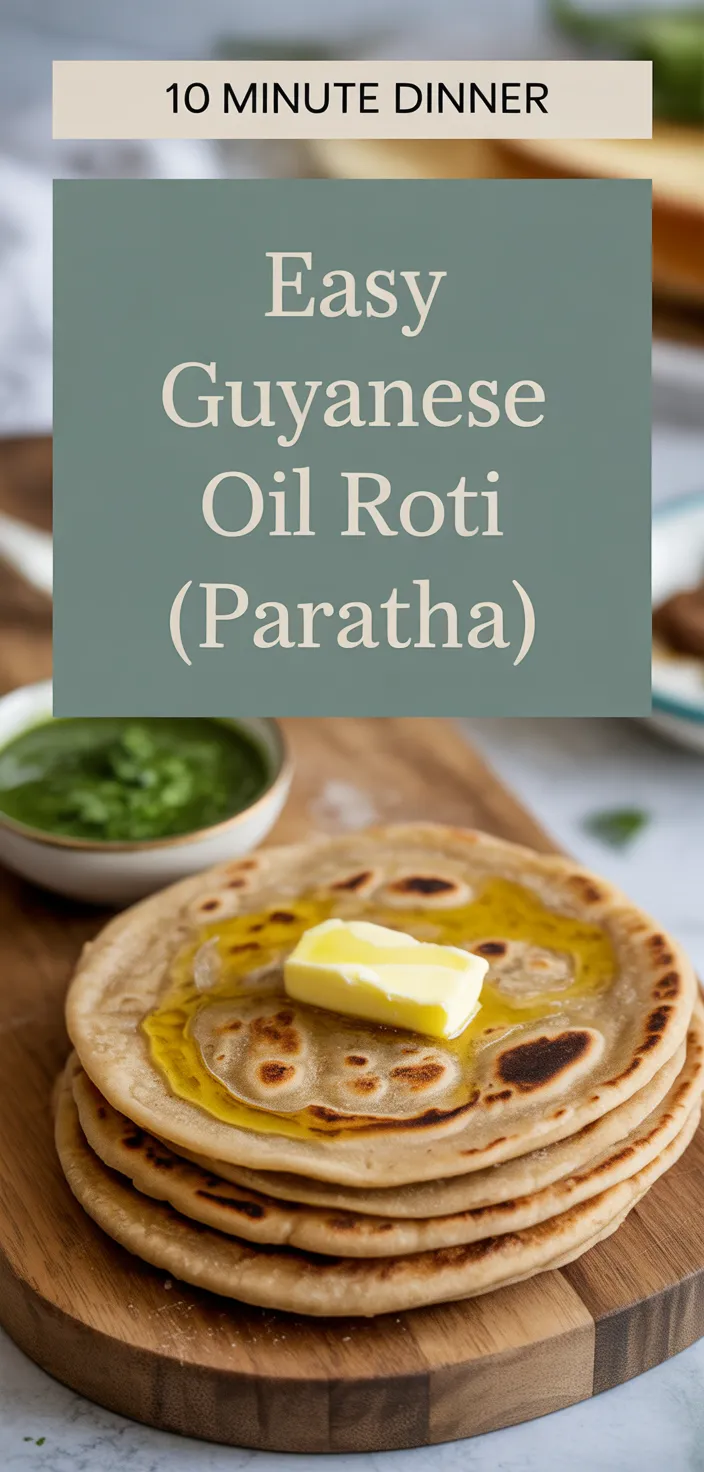
I’m obsessive about Guyanese oil roti because it hits that buttery, flaky spot better than anything else in my life. I love how the simple all purpose flour turns into layers that pull apart with each bite.
And the slickness from vegetable oil gives it that shiny, slightly crisp exterior I can’t resist. This is not sentimental nonsense.
It’s flatbread stripped down to joy: chew, crackle, more chew. I want it with curries, for late-night sandwich experiments, and alone, straight from the pan while it’s still hot.
Pure, unapologetic roti worship. No fuss, just flaky layers and relentless, greasy devotion.
Ingredients
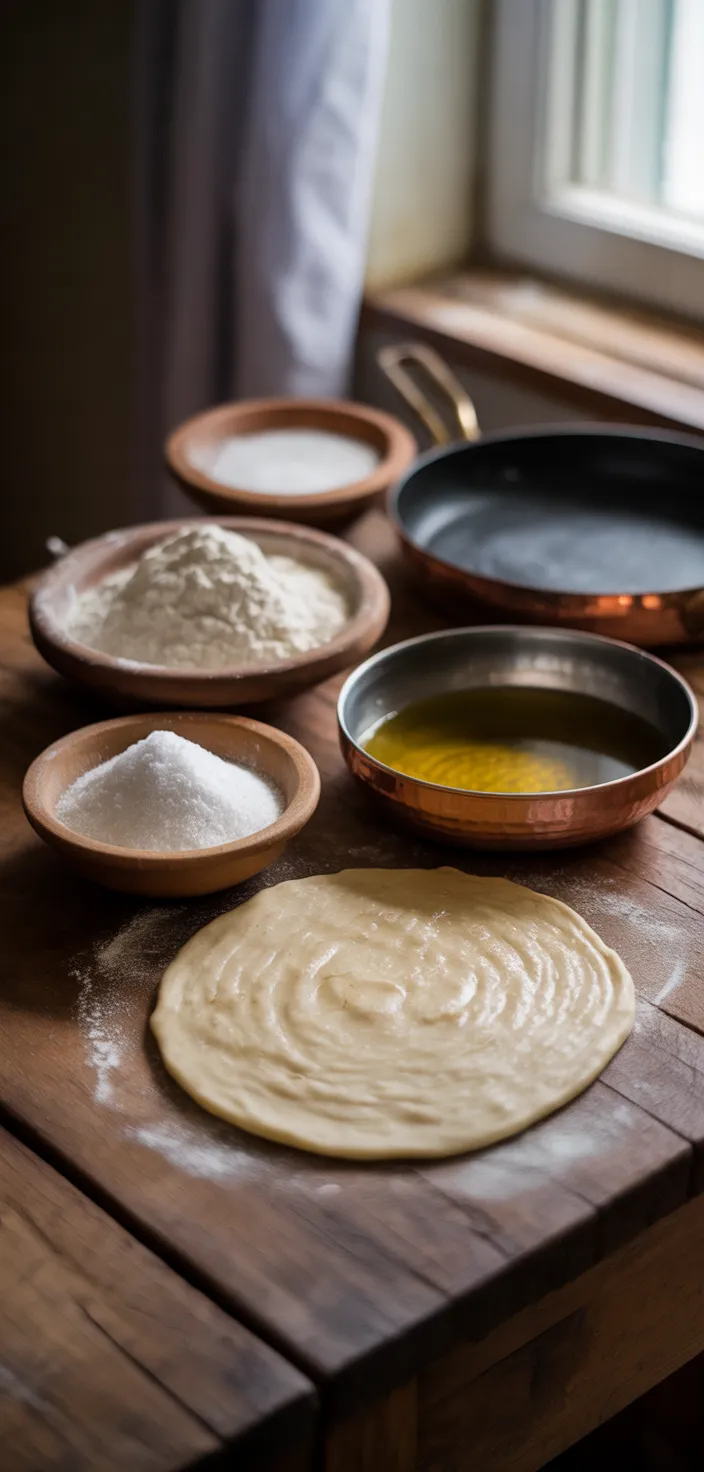
- All-purpose flour gives structure and soft chew; it’s the roti’s backbone.
- Salt wakes up the dough’s taste; you’ll notice it in every bite.
- Basically adds slight lift and airiness, making layers puff a bit.
- Plus a touch of sugar rounds flavors and browns the surface nicely.
- Oil keeps dough tender and pliable; it’s why roti flakes.
- Warm water helps the dough come together smoothly, not sticky or tough.
- Basically butter or oil during rolling makes flaky, buttery layers and shine.
- Plus oil on the pan gives crisp golden spots and prevents sticking.
Ingredient Quantities
- 2 cups (250 g) all purpose flour
- 1 teaspoon salt
- 1/2 teaspoon baking powder
- 1 teaspoon granulated sugar (optional, but I usually add it)
- 2 tablespoons vegetable oil for the dough
- about 3/4 cup (180 ml) warm water, plus more if needed to make a soft dough
- 2 tablespoons vegetable oil or melted butter for rolling and layering
- 2 tablespoons vegetable oil for cooking the roti on the pan
How to Make this
1. In a large bowl mix 2 cups (250 g) all purpose flour, 1 teaspoon salt, 1/2 teaspoon baking powder and 1 teaspoon granulated sugar if you want it slightly sweet.
2. Add 2 tablespoons vegetable oil to the dry mix and rub it in with your fingers until the flour looks crumbly and a bit cohesive.
3. Pour in about 3/4 cup (180 ml) warm water a little at a time and bring the dough together, adding a splash more water if needed to make a soft, slightly tacky dough. Don’t make it too sticky.
4. Knead on a lightly floured surface for 5 to 7 minutes until smooth and elastic, then shape into a ball. Cover with a damp towel or plastic wrap and let rest for at least 20 to 30 minutes so the gluten relaxes.
5. Divide the dough into 6 to 8 equal pieces, roll each into a ball, then flatten slightly with your palm.
6. On a lightly oiled surface, roll each ball into a thin circle about 7 to 8 inches across using 2 tablespoons vegetable oil or melted butter to brush on top as you roll. Brush top lightly, fold or pleat the circle into layers (you can fold like an envelope or roll up like a jelly roll then coil), then flatten gently and roll again to a 7 inch round. This creates the flaky layers.
7. Heat a heavy skillet or cast iron pan over medium high heat and add 2 tablespoons vegetable oil for cooking. Once hot, place one rolled roti in the pan.
8. Cook for about 1 to 1 1/2 minutes until brown spots appear, flip and press gently with a spatula or cloth, cook another 1 to 1 1/2 minutes until both sides are golden and puffed in places. Add a little more oil if needed for crispiness.
9. Remove and keep warm wrapped in a clean towel while you finish the rest. Best served hot with curry, dhal or whatever you like.
10. Tip: don’t skip the resting and the oil layers, that’s what makes it flaky; if your dough is resisting while rolling, let it rest a few more minutes and oil your rolling surface.
Equipment Needed
1. Large mixing bowl
2. Measuring cups and spoons
3. Kitchen scale (optional, for accuracy)
4. Pastry cutter or your fingers to rub in the oil
5. Rolling pin
6. Bench scraper or knife to divide the dough
7. Heavy skillet or cast iron pan
8. Metal or heatproof spatula (for pressing and flipping)
9. Pastry brush or small spoon for brushing oil/butter
10. Clean towel or plate to keep rotis warm and covered
FAQ
Easy Guyanese Oil Roti (Paratha) Recipe Substitutions and Variations
Easy Guyanese Oil Roti (Paratha) — simple, flaky, and quick to make. Here are a few handy swaps if you don’t have the exact ingredients.
- All purpose flour: use whole wheat pastry flour for a nuttier, slightly denser roti, or use self rising flour and skip the baking powder and salt adjustments.
- Vegetable oil for dough and layering: swap with melted ghee or unsalted butter for richer flavor and flakier layers.
- Warm water: use warm milk or thin buttermilk for a slightly softer, more tender dough.
- Baking powder: if you don’t have it, use 1/4 teaspoon baking soda plus 1/2 teaspoon cream of tartar as a quick substitute.
Pro Tips
– Rest longer if the dough fights you. If it snaps back while rolling, cover and let it sit another 10 to 20 minutes. Relaxed gluten makes rolling and layering way easier and gives better flaky layers.
– Use slightly warm water, not hot. Warm water helps bring the dough together faster, but hot water will kill the elasticity and make it gummy. Add water slowly so you don’t end up with a sticky mess.
– Oil sparingly while rolling, but don’t skimp. Lightly brush the surface each time you fold or roll so the layers separate when cooking. Too much oil will make them greasy, too little and the flakes won’t form.
– Cook on a properly hot, well seasoned skillet and don’t fuss with it. Get the pan hot, then lower to medium high so it browns without burning. Press gently after flipping to encourage puffing. Keep finished rotis wrapped in a clean towel to stay soft until serving.
Easy Guyanese Oil Roti (Paratha) Recipe
My favorite Easy Guyanese Oil Roti (Paratha) Recipe
Equipment Needed:
1. Large mixing bowl
2. Measuring cups and spoons
3. Kitchen scale (optional, for accuracy)
4. Pastry cutter or your fingers to rub in the oil
5. Rolling pin
6. Bench scraper or knife to divide the dough
7. Heavy skillet or cast iron pan
8. Metal or heatproof spatula (for pressing and flipping)
9. Pastry brush or small spoon for brushing oil/butter
10. Clean towel or plate to keep rotis warm and covered
Ingredients:
- 2 cups (250 g) all purpose flour
- 1 teaspoon salt
- 1/2 teaspoon baking powder
- 1 teaspoon granulated sugar (optional, but I usually add it)
- 2 tablespoons vegetable oil for the dough
- about 3/4 cup (180 ml) warm water, plus more if needed to make a soft dough
- 2 tablespoons vegetable oil or melted butter for rolling and layering
- 2 tablespoons vegetable oil for cooking the roti on the pan
Instructions:
1. In a large bowl mix 2 cups (250 g) all purpose flour, 1 teaspoon salt, 1/2 teaspoon baking powder and 1 teaspoon granulated sugar if you want it slightly sweet.
2. Add 2 tablespoons vegetable oil to the dry mix and rub it in with your fingers until the flour looks crumbly and a bit cohesive.
3. Pour in about 3/4 cup (180 ml) warm water a little at a time and bring the dough together, adding a splash more water if needed to make a soft, slightly tacky dough. Don’t make it too sticky.
4. Knead on a lightly floured surface for 5 to 7 minutes until smooth and elastic, then shape into a ball. Cover with a damp towel or plastic wrap and let rest for at least 20 to 30 minutes so the gluten relaxes.
5. Divide the dough into 6 to 8 equal pieces, roll each into a ball, then flatten slightly with your palm.
6. On a lightly oiled surface, roll each ball into a thin circle about 7 to 8 inches across using 2 tablespoons vegetable oil or melted butter to brush on top as you roll. Brush top lightly, fold or pleat the circle into layers (you can fold like an envelope or roll up like a jelly roll then coil), then flatten gently and roll again to a 7 inch round. This creates the flaky layers.
7. Heat a heavy skillet or cast iron pan over medium high heat and add 2 tablespoons vegetable oil for cooking. Once hot, place one rolled roti in the pan.
8. Cook for about 1 to 1 1/2 minutes until brown spots appear, flip and press gently with a spatula or cloth, cook another 1 to 1 1/2 minutes until both sides are golden and puffed in places. Add a little more oil if needed for crispiness.
9. Remove and keep warm wrapped in a clean towel while you finish the rest. Best served hot with curry, dhal or whatever you like.
10. Tip: don’t skip the resting and the oil layers, that’s what makes it flaky; if your dough is resisting while rolling, let it rest a few more minutes and oil your rolling surface.