
I swear my Homemade Vegetable Broth makes every soup and risotto taste like I spent hours cooking.
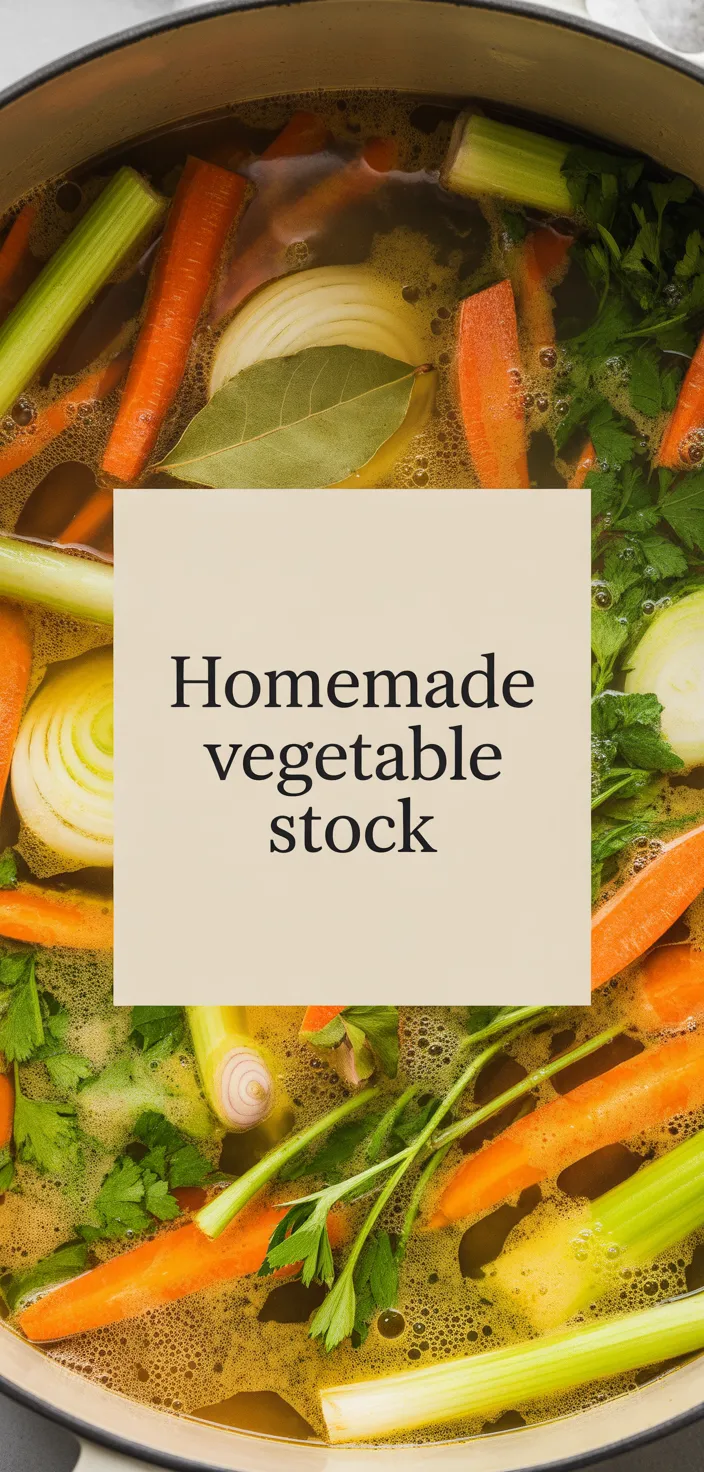
I adore Homemade Vegetable Broth because it tastes like the best part of a meal boiled down into liquid gold. I save every bit I can, odds and ends from the crisper, and when I need depth for risotto or Creamy Spinach Soup I reach for jar.
It’s frugal, bold, and actually tastes like vegetables instead of water pretending to be something else. I love the way a large onion-streaked pot and bay leaves shift everything from flat to singing.
No waste, huge flavor, zero guilt. I use it in soups, dressings, anything that needs soul and never ever bland.
Ingredients
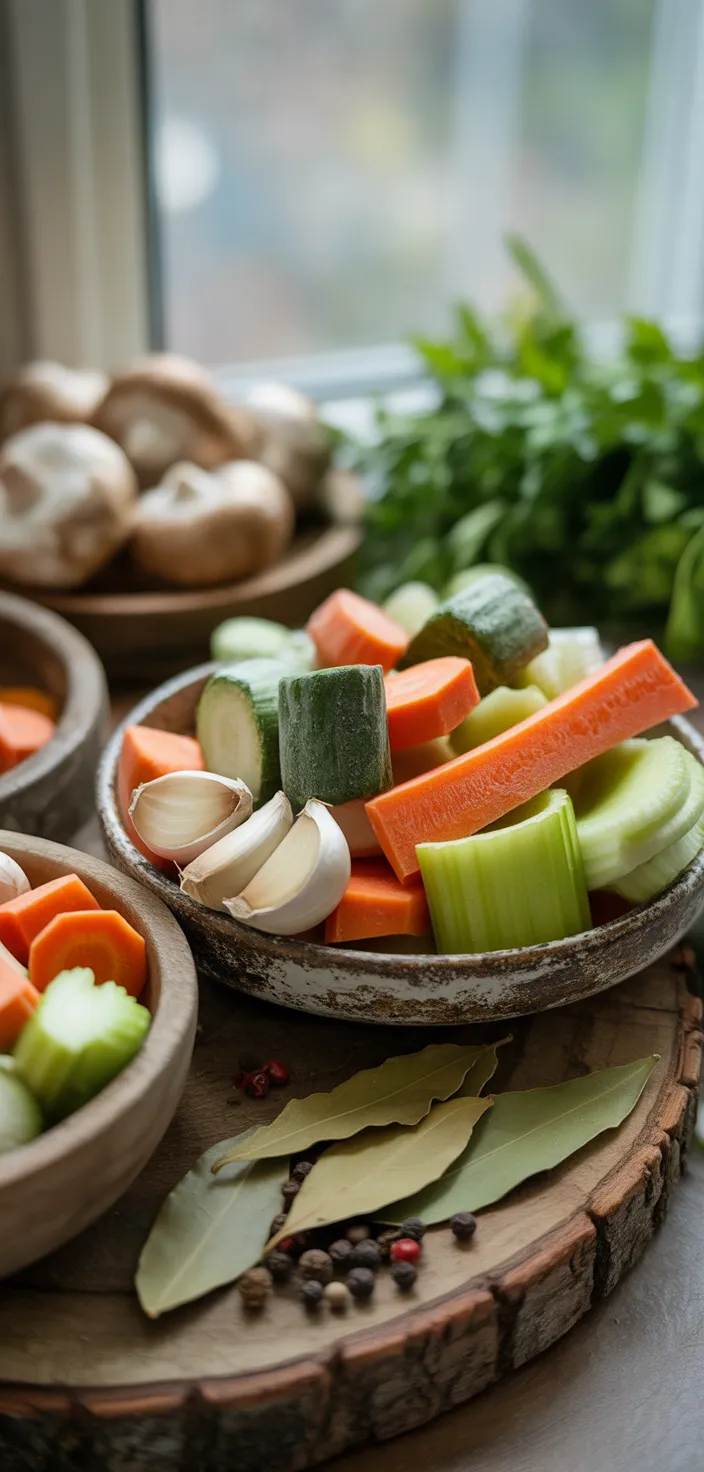
- Mixed scraps bring depth and that zero-waste vibe, it’s humble.
- Onion adds sweetness and color.
Plus, savory backbone.
- Carrots give sweetness and a hint of earthiness, basically bright.
- Celery gives brightness and a little vegetal bite, crisp note.
- Garlic punches it up, warm and slightly sweet, you’ll notice.
- Mushrooms add umami richness, almost meaty warmth and depth.
- Parsley adds freshness, clean green lift.
Basically lightens things.
- Bay leaves give subtle aromatic warmth, it’s quietly herbal.
- Peppercorns add gentle heat and little spice pops.
- Thyme brings herbal earthiness and quiet pine-like notes.
- Salt pulls everything together, you’ll taste details better.
- Water carries it all, simple and essential, makes stock possible.
Ingredient Quantities
- 6 to 8 cups mixed vegetable scraps and trimmings, frozen or fresh
- 1 large onion, skins ok for color
- 2 medium carrots, roughly chopped
- 2 celery stalks, leaves included
- 3 garlic cloves, smashed
- 1 cup mushrooms, stems and pieces
- 1 small bunch fresh parsley
- 2 bay leaves
- 1 teaspoon whole black peppercorns
- 4 to 6 sprigs fresh thyme or 1 teaspoon dried thyme
- 1 teaspoon salt, or to taste, optional
- 10 to 12 cups cold water, enough to cover scraps
How to Make this
1. Put 6 to 8 cups of mixed vegetable scraps and trimmings (frozen or fresh) in a large stockpot with 1 large onion (skins ok), 2 roughly chopped carrots, 2 celery stalks with leaves, 3 smashed garlic cloves, 1 cup mushrooms, and 1 small bunch of parsley.
2. Add 2 bay leaves, 1 teaspoon whole black peppercorns, 4 to 6 sprigs fresh thyme or 1 teaspoon dried thyme, and 1 teaspoon salt if you want salt now (you can always salt later).
3. Pour in 10 to 12 cups cold water, just enough to cover the scraps by an inch or so; dont overfill the pot.
4. Bring the pot to a gentle boil over medium-high heat, then lower to a simmer right away to keep it clear. Skim any foam that rises for a cleaner tasting stock.
5. Let it simmer uncovered for 45 minutes to 1 hour for a light stock, or up to 2 hours if you want more extraction; dont boil hard or the flavor can turn bitter.
6. Taste near the end and adjust salt if needed. If it tastes weak, simmer a bit longer; too vegetal or bitter usually means overcooking cruciferous scraps, so avoid those next time.
7. Remove from heat and strain the stock through a fine mesh strainer or cheesecloth into a big bowl, pressing gently on solids to get the liquid out but not mush.
8. Cool the stock quickly by setting the bowl in an ice bath or divide into smaller containers. Refrigerate up to 4 days or freeze for 3 months; ice cube trays are great for single-cup or cooking-size portions.
9. Compost the strained vegetable solids or spread them thin on a baking sheet to dry for garden mulch. If you want a deeper flavor next time, roast the scraps and onion at 400F until browned before simmering.
10. Label containers with date and use the stock in soups, risottos, sauces, or anywhere you want a flavor boost. Enjoy, and keep filling a freezer bag with scraps so youve always got stock-ready veggies.
Equipment Needed
1. Large stockpot (8 to 12 quart)
2. Chef’s knife and a cutting board
3. Wooden spoon or heatproof spatula for stirring
4. Fine mesh strainer or cheesecloth to strain the stock
5. Large bowl or another pot to catch the strained liquid
6. Ladle for transferring the stock
7. Ice bath setup: a rimmed baking sheet or large bowl plus ice to cool fast
8. Airtight containers, jars or ice cube trays for storing and freezing
FAQ
How To Make Homemade Vegetable Stock Recipe Substitutions and Variations
How To Make Homemade Vegetable Stock
Ingredients
- 6 to 8 cups mixed vegetable scraps and trimmings, frozen or fresh
- 1 large onion, skins ok for color
- 2 medium carrots, roughly chopped
- 2 celery stalks, leaves included
- 3 garlic cloves, smashed
- 1 cup mushrooms, stems and pieces
- 1 small bunch fresh parsley
- 2 bay leaves
- 1 teaspoon whole black peppercorns
- 4 to 6 sprigs fresh thyme or 1 teaspoon dried thyme
- 1 teaspoon salt, or to taste, optional
- 10 to 12 cups cold water, enough to cover scraps
Method
1. Toss all the ingredients into a large stockpot and add the cold water so everything is just covered. dont worry if some bits peek out, theyll still flavor the liquid.
2. Bring to a gentle boil over medium-high heat, then lower to a simmer. Skim any foam that rises for a clearer stock.
3. Simmer uncovered for 45 minutes to 1 hour for a light stock, up to 2 hours for deeper flavor. Avoid boiling hard, it can make the stock bitter.
4. Taste near the end and add salt if you like. Remember you can always add salt later when using the stock.
5. Strain through a fine mesh sieve or cheesecloth into a bowl or pot, pressing lightly on solids to get the flavorful liquid. Discard the solids or compost them.
6. Cool quickly and refrigerate for up to 4 days or freeze in portions for up to 3 months.
Quick tips
– Use frozen scraps when you cant compost them right away. They work great.
– Avoid brassicas like broccoli or cabbage in large amounts, they make the stock bitter.
– If you want a richer color, leave onion skins on. For a clearer flavor, peel them.
– Roast the vegetables first at 425F for 20 to 30 minutes for a deeper, almost meaty stock.
Substitutions
- Onion: Use 2 to 3 shallots or 1 large leek (white and light green parts only) for a milder, sweeter base
- Carrots: Parsnips or fennel can be swapped in for a slightly sweeter or anisey note
- Mushrooms: 1 to 2 tablespoons dried shiitake or porcini rehydrated gives extra umami if fresh mushrooms arent available
- Fresh herbs (parsley, thyme): Replace with 1 teaspoon dried mixed herbs total, added during simmering
Pro Tips
1. Roast a portion of the scraps first for deeper flavor. Toss onion halves, carrot chunks, mushrooms and any sturdy peels with a little oil and roast at 400 F until browned, then add to the pot. You dont need to roast everything, just 1 or 2 trays to give the whole batch more body.
2. Use cold water and start cold every time. That helps pull more flavor out of the veggies. Also dont overfill the pot; you want the scraps covered but not swimming so the extraction stays concentrated.
3. Skim early and often, but gently. As soon as it boils lightly there will be foam. Scoop it off with a slotted spoon, it makes the stock clearer and less bitter. Lower to a slow simmer right after the first boil, a hard boil will cloud and roughen the taste.
4. Freeze in portions you actually use. Ice cube trays are perfect for small additions, and 1 to 2 cup portions are great for soups or sauces. Label with date, and pop older batches to the front so nothing gets forgotten.
How To Make Homemade Vegetable Stock Recipe
My favorite How To Make Homemade Vegetable Stock Recipe
Equipment Needed:
1. Large stockpot (8 to 12 quart)
2. Chef’s knife and a cutting board
3. Wooden spoon or heatproof spatula for stirring
4. Fine mesh strainer or cheesecloth to strain the stock
5. Large bowl or another pot to catch the strained liquid
6. Ladle for transferring the stock
7. Ice bath setup: a rimmed baking sheet or large bowl plus ice to cool fast
8. Airtight containers, jars or ice cube trays for storing and freezing
Ingredients:
- 6 to 8 cups mixed vegetable scraps and trimmings, frozen or fresh
- 1 large onion, skins ok for color
- 2 medium carrots, roughly chopped
- 2 celery stalks, leaves included
- 3 garlic cloves, smashed
- 1 cup mushrooms, stems and pieces
- 1 small bunch fresh parsley
- 2 bay leaves
- 1 teaspoon whole black peppercorns
- 4 to 6 sprigs fresh thyme or 1 teaspoon dried thyme
- 1 teaspoon salt, or to taste, optional
- 10 to 12 cups cold water, enough to cover scraps
Instructions:
1. Put 6 to 8 cups of mixed vegetable scraps and trimmings (frozen or fresh) in a large stockpot with 1 large onion (skins ok), 2 roughly chopped carrots, 2 celery stalks with leaves, 3 smashed garlic cloves, 1 cup mushrooms, and 1 small bunch of parsley.
2. Add 2 bay leaves, 1 teaspoon whole black peppercorns, 4 to 6 sprigs fresh thyme or 1 teaspoon dried thyme, and 1 teaspoon salt if you want salt now (you can always salt later).
3. Pour in 10 to 12 cups cold water, just enough to cover the scraps by an inch or so; dont overfill the pot.
4. Bring the pot to a gentle boil over medium-high heat, then lower to a simmer right away to keep it clear. Skim any foam that rises for a cleaner tasting stock.
5. Let it simmer uncovered for 45 minutes to 1 hour for a light stock, or up to 2 hours if you want more extraction; dont boil hard or the flavor can turn bitter.
6. Taste near the end and adjust salt if needed. If it tastes weak, simmer a bit longer; too vegetal or bitter usually means overcooking cruciferous scraps, so avoid those next time.
7. Remove from heat and strain the stock through a fine mesh strainer or cheesecloth into a big bowl, pressing gently on solids to get the liquid out but not mush.
8. Cool the stock quickly by setting the bowl in an ice bath or divide into smaller containers. Refrigerate up to 4 days or freeze for 3 months; ice cube trays are great for single-cup or cooking-size portions.
9. Compost the strained vegetable solids or spread them thin on a baking sheet to dry for garden mulch. If you want a deeper flavor next time, roast the scraps and onion at 400F until browned before simmering.
10. Label containers with date and use the stock in soups, risottos, sauces, or anywhere you want a flavor boost. Enjoy, and keep filling a freezer bag with scraps so youve always got stock-ready veggies.