I can’t wait to share my Handmade Lasagna Noodles technique and the one little trick that guarantees evenly rolled sheets.
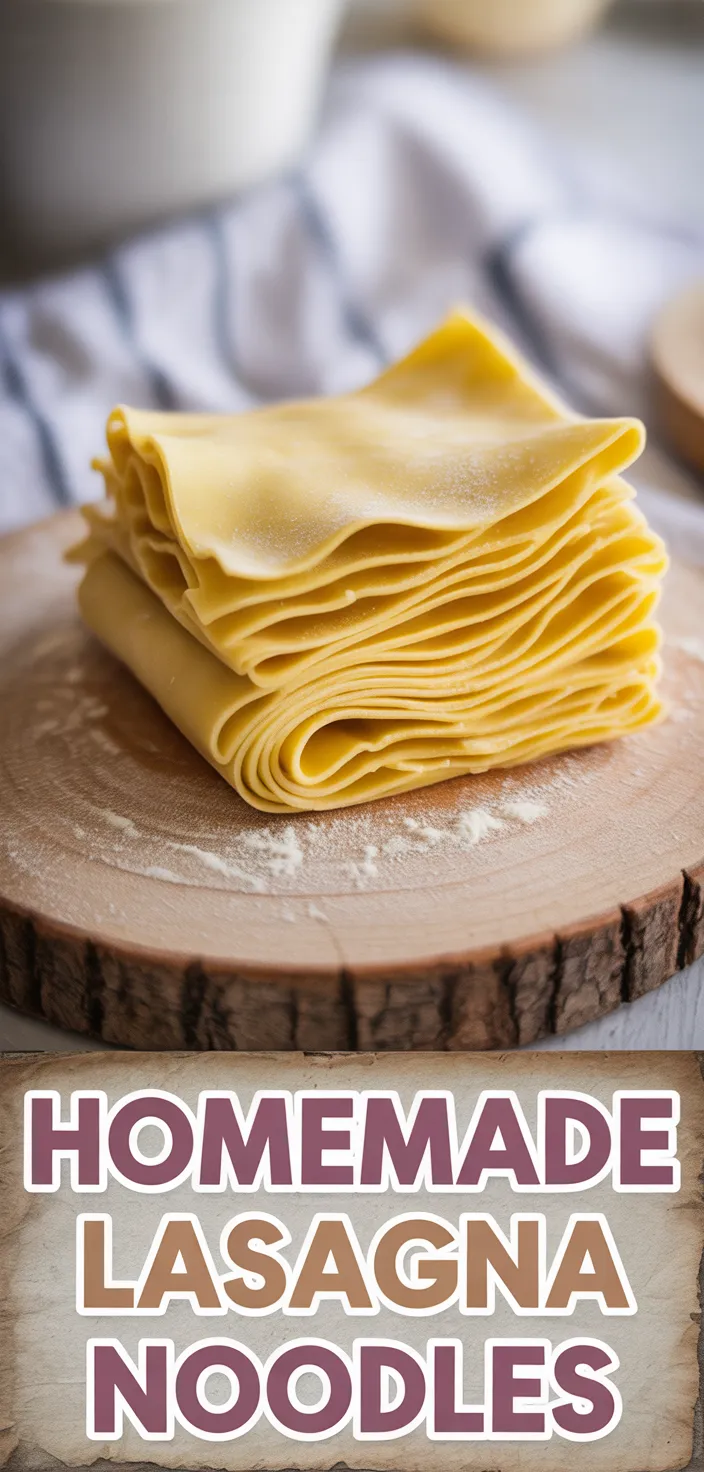
I never thought a sheet of pasta could make me this picky, but making Homemade Lasagna Noodles changed that. Rolling out silky ribbons from nothing but all purpose flour and eggs room temp feels stubborn and oddly thrilling, and those little faults you get when you roll by hand make each piece more honest.
I love that Handmade Lasagna Noodles look messy but sing in the oven, it makes me want to chase a new Lasagna Noodles Recipe every weekend, even though sometimes I burn one side or fold them wrong. If you like hands on kitchen projects this will keep you curious.
Ingredients
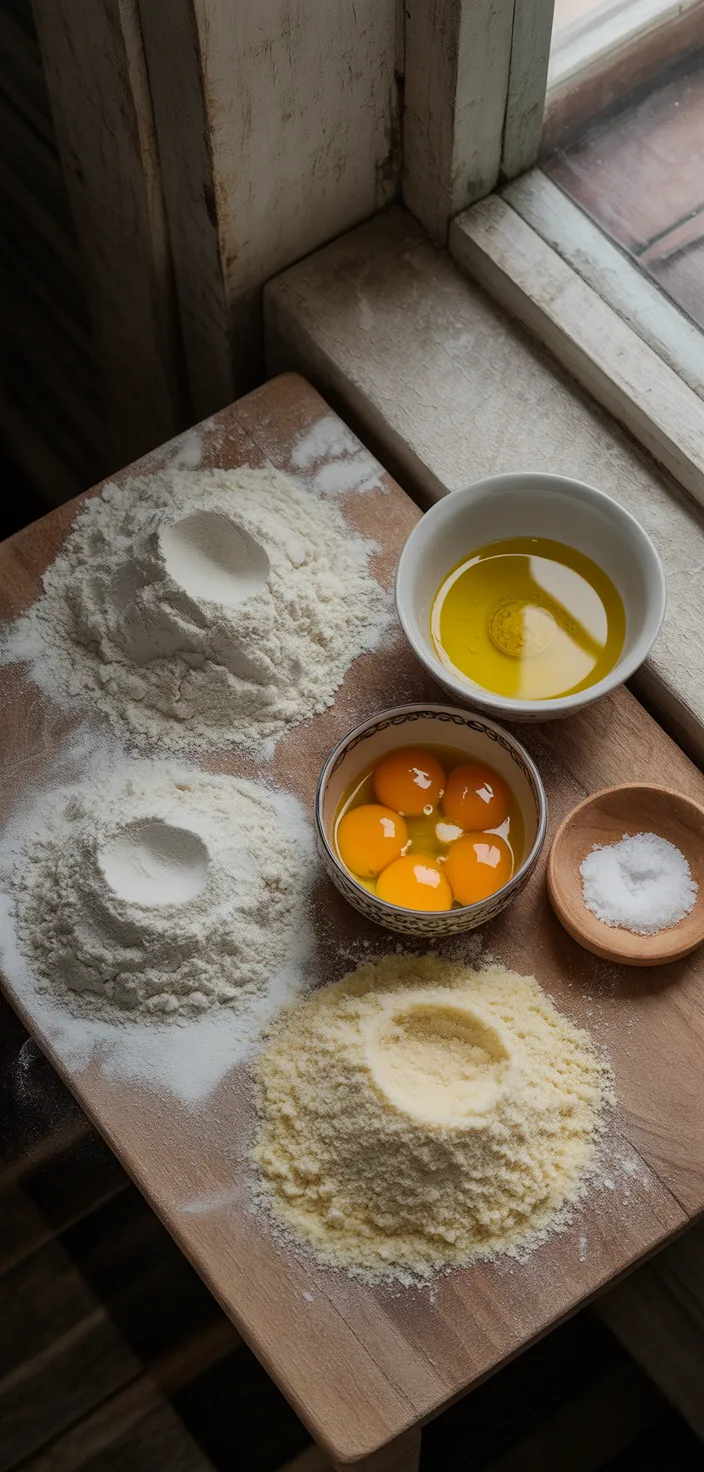
- Provides carbohydrate and gluten for structure, gives tender chew when mixed right for pasta
- Adds protein, a slightly gritty bite and golden color, great for firm noodles, nutty
- Rich in protein and fat, naturally bind dough and add silky richness and color
- Healthy monounsaturated fats, moisturizes dough, makes rolling easier and chew smoother, adds shine
- Enhances flavor, helps gluten develop subtly, balances overall taste of pasta a little
- Used sparingly only if needed, loosens stiff dough without making it sticky during kneading
- Prevents sticking during rolling, keeps sheets dry, small extra carbs only while resting
Ingredient Quantities
- 3 cups (375 g) all purpose flour
- 1 cup (120 g) semolina flour, plus extra for dusting
- 4 large eggs room temp
- 1 tablespoon extra virgin olive oil
- 1 teaspoon fine sea salt
- 2 to 4 tablespoons warm water, only if dough feels dry
- Extra flour or semolina for rolling and resting, about 1/4 cup
How to Make this
1. In a large bowl whisk together 3 cups (375 g) all purpose flour and 1 cup (120 g) semolina flour, then make a well in the center.
2. Crack 4 large room temp eggs into the well, add 1 tablespoon extra virgin olive oil and 1 teaspoon fine sea salt, beat lightly with a fork and slowly pull flour into the egg mixture until a shaggy dough forms.
3. If the dough seems dry add 2 to 4 tablespoons warm water, a tablespoon at a time, until it just comes together; if too sticky dust with a bit more semolina or flour.
4. Turn dough onto a lightly floured surface (use the extra 1/4 cup flour or semolina) and knead about 8 to 10 minutes until smooth and elastic, it should be firm but not rock hard.
5. Wrap the dough tightly in plastic or cover with a bowl and let rest 30 minutes at room temp so the gluten relaxes, this makes rolling way easier.
6. Divide dough into 4 pieces, keep the pieces you arent working with covered so they dont dry out, flatten one piece into a disk and dust with semolina.
7. Roll thin with a pasta machine starting on the widest setting and work down to near the thinnest setting, or use a rolling pin to about
1.5 mm thick; dust between sheets with semolina to prevent sticking.
8. Cut rolled sheets to lasagna size (about 9×13 inches or to fit your pan) or trim to even rectangles; lay sheets on a lightly floured towel or rack separated by semolina so they dont stick.
9. Either boil sheets 1 to 2 minutes in plenty of salted water until just al dente then drain and cool on a towel, or use raw in your lasagna but be sure to use generous sauce so they cook through in the oven; you can also dry on racks a few hours for easier layering.
10. Tip: if dough tears patch with a little water and press, if it feels tough you over kneaded, if sticky add semolina not too much flour, and always use room temp eggs for better texture.
Equipment Needed
1. Large mixing bowl, for whisking flours and making the egg well
2. Measuring cups, measuring spoons and a digital kitchen scale, recipe lists grams and cups so use what you prefer
3. Fork or small whisk, to beat the eggs and pull flour in (dont use a mixer)
4. Clean work surface or pastry board, lightly floured for kneading and rolling
5. Bench scraper or sharp knife, to divide dough and lift/trim sheets
6. Rolling pin or pasta machine, roll to about 1.5 mm or use the machine from wide to thin
7. Pasta cutter or pizza wheel, to cut sheets to lasagna size
8. Large pot and colander, for boiling sheets briefly and draining
9. Plastic wrap or a bowl to cover the dough, plus a clean kitchen towel or rack to separate sheets so they dont stick
FAQ
Homemade Lasagna Noodles Recipe Substitutions and Variations
- All purpose flour: swap with Italian tipo 00 flour 1:1 for silkier, smoother noodles; or use bread flour for a chewier bite; you can also replace up to ~25% with whole wheat pastry flour for a nuttier flavor but the dough will be denser.
- Semolina flour: use fine durum wheat flour 1:1 for very similar texture; if you only have coarse semolina grind it a bit in a food processor, or as a last resort use 3/4 cup AP flour plus 2 tbsp fine cornmeal (gives a bit of bite).
- Eggs: for eggless pasta replace 4 large eggs with about 1/2 cup aquafaba (roughly 2 tbsp per egg) or use 1/2 to 3/4 cup warm water plus 2 tbsp olive oil — results in a leaner, paler, chewier pasta.
- Extra virgin olive oil: swap with light olive oil or a neutral oil like grapeseed or sunflower oil 1:1, or use melted butter for richer flavor, same quantity.
Pro Tips
1. Aim for feel not numbers: you want a dough that springs back and stretches thin without tearing, if you can make a tiny translucent patch when you pull it thats the windowpane moment. If it tears patch it with a drop of water and press, but if it stays tough you already overworked it so stop kneading.
2. Rest properly and keep things covered, 30 minutes at room temp really relaxes the gluten and makes rolling effortless. Keep unused pieces wrapped tight or under a bowl, and dust them with semolina so they dont dry into crunchy edges.
3. Use semolina to dust not extra all purpose flour, semolina gives tooth and keeps sheets from sticking without making them gummy. Also when you roll, work gradually to thinner settings and dust between sheets, that way you avoid long sticky messes and get even thickness for baking.
4. Decide your cooking method before layering: if you want faster bake use boiled sheets so theyre reliably al dente, if you want to use raw sheets be generous with sauce and cover the pan well so they cook through. And always use room temp eggs for a silkier dough, olive oil helps with pliability so dont skip it.
Homemade Lasagna Noodles Recipe
My favorite Homemade Lasagna Noodles Recipe
Equipment Needed:
1. Large mixing bowl, for whisking flours and making the egg well
2. Measuring cups, measuring spoons and a digital kitchen scale, recipe lists grams and cups so use what you prefer
3. Fork or small whisk, to beat the eggs and pull flour in (dont use a mixer)
4. Clean work surface or pastry board, lightly floured for kneading and rolling
5. Bench scraper or sharp knife, to divide dough and lift/trim sheets
6. Rolling pin or pasta machine, roll to about 1.5 mm or use the machine from wide to thin
7. Pasta cutter or pizza wheel, to cut sheets to lasagna size
8. Large pot and colander, for boiling sheets briefly and draining
9. Plastic wrap or a bowl to cover the dough, plus a clean kitchen towel or rack to separate sheets so they dont stick
Ingredients:
- 3 cups (375 g) all purpose flour
- 1 cup (120 g) semolina flour, plus extra for dusting
- 4 large eggs room temp
- 1 tablespoon extra virgin olive oil
- 1 teaspoon fine sea salt
- 2 to 4 tablespoons warm water, only if dough feels dry
- Extra flour or semolina for rolling and resting, about 1/4 cup
Instructions:
1. In a large bowl whisk together 3 cups (375 g) all purpose flour and 1 cup (120 g) semolina flour, then make a well in the center.
2. Crack 4 large room temp eggs into the well, add 1 tablespoon extra virgin olive oil and 1 teaspoon fine sea salt, beat lightly with a fork and slowly pull flour into the egg mixture until a shaggy dough forms.
3. If the dough seems dry add 2 to 4 tablespoons warm water, a tablespoon at a time, until it just comes together; if too sticky dust with a bit more semolina or flour.
4. Turn dough onto a lightly floured surface (use the extra 1/4 cup flour or semolina) and knead about 8 to 10 minutes until smooth and elastic, it should be firm but not rock hard.
5. Wrap the dough tightly in plastic or cover with a bowl and let rest 30 minutes at room temp so the gluten relaxes, this makes rolling way easier.
6. Divide dough into 4 pieces, keep the pieces you arent working with covered so they dont dry out, flatten one piece into a disk and dust with semolina.
7. Roll thin with a pasta machine starting on the widest setting and work down to near the thinnest setting, or use a rolling pin to about
1.5 mm thick; dust between sheets with semolina to prevent sticking.
8. Cut rolled sheets to lasagna size (about 9×13 inches or to fit your pan) or trim to even rectangles; lay sheets on a lightly floured towel or rack separated by semolina so they dont stick.
9. Either boil sheets 1 to 2 minutes in plenty of salted water until just al dente then drain and cool on a towel, or use raw in your lasagna but be sure to use generous sauce so they cook through in the oven; you can also dry on racks a few hours for easier layering.
10. Tip: if dough tears patch with a little water and press, if it feels tough you over kneaded, if sticky add semolina not too much flour, and always use room temp eggs for better texture.