I reveal little-known, foolproof techniques for authentic Bucatini Cacio e Pepe using only the traditional three ingredients and the classic Roman Food method that lets the sauce form in the pan rather than being made separately.
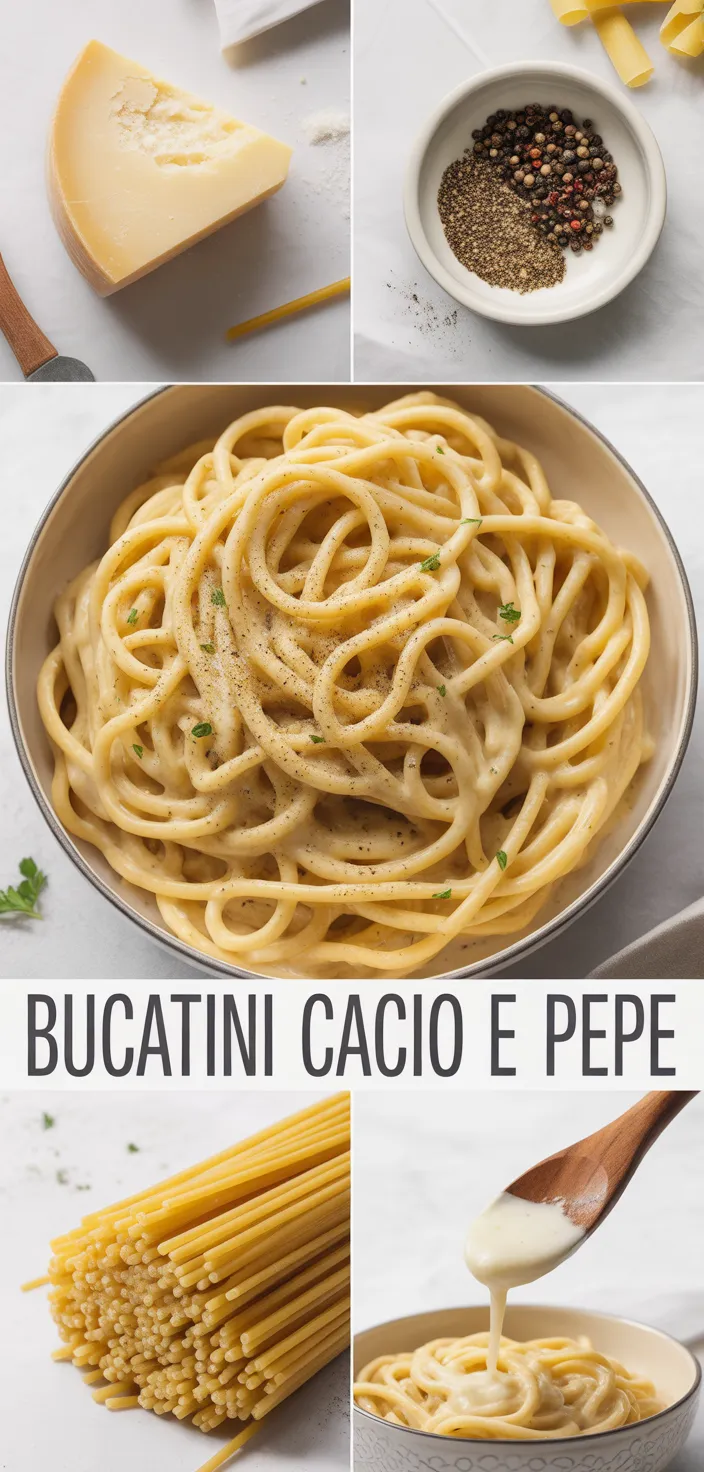
I grew up thinking every Cacio e Pepe was a shortcut comfort food, until I made it the Roman way with bucatini and Pecorino Romano. No fake sauce, no tricks, just technique that turns starch and heat into silk.
Most versions outside Rome feel like Italian Mac and Cheese but this is different, the texture is what gets you. I show the tensions, the little timing mistakes you’re gonna make and how to fix them, so you end up with something people rave about.
This is one of my Fool Proof Recipes and yes, it belongs in any Roman Food rotation.
Ingredients
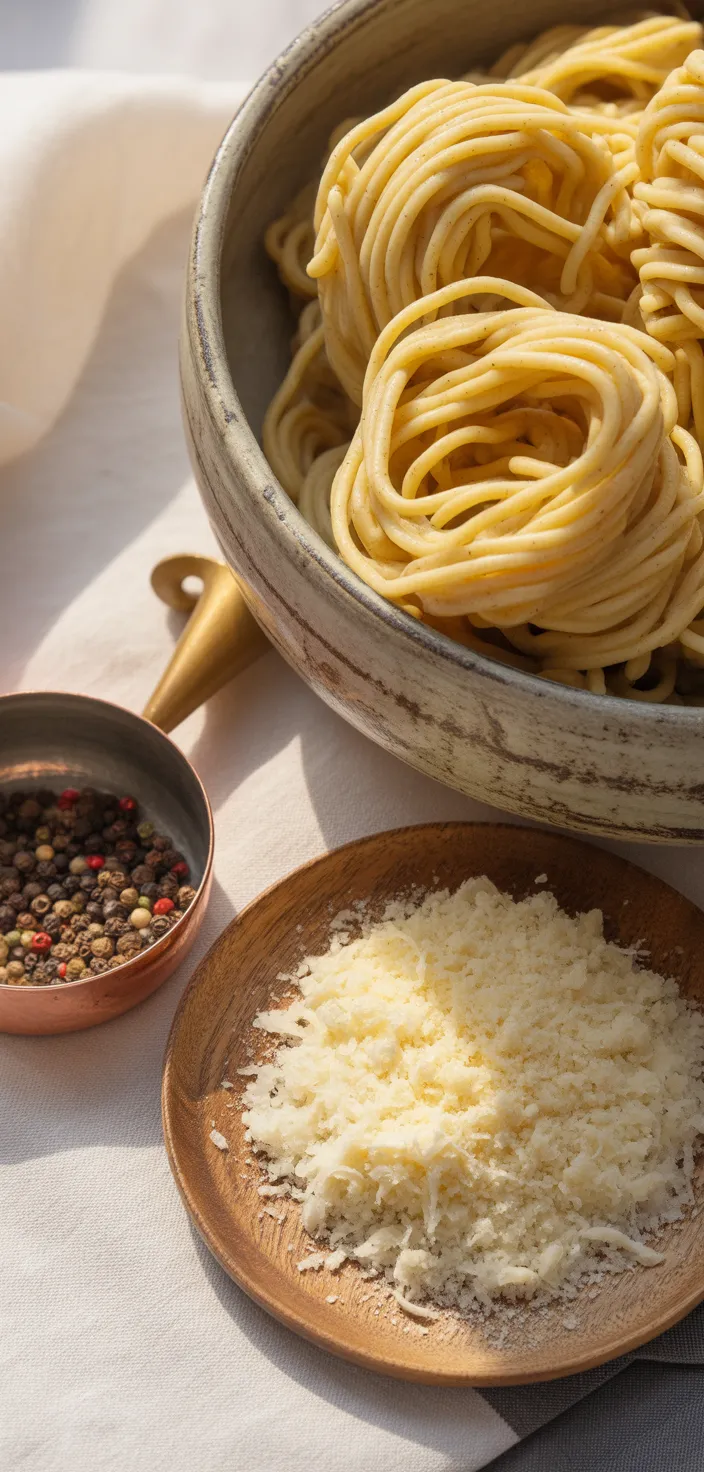
- Bucatini: chewy wheat pasta, it’s high in carbs, some fiber, great for creamy sauce.
- Pecorino Romano: salty sheep cheese, rich in protein and calcium, it packs savory punch.
- Black pepper: gives heat and citrusy bite, almost zero calories, it wakes up flavor.
- Sea salt: enhances flavors, needed for balance, doesn’t make it sweet, watch sodium.
Ingredient Quantities
- 400 g bucatini (about 14 oz)
- 200 g Pecorino Romano, very finely grated (about 1 3/4 cups packed)
- 2 teaspoons freshly cracked black pepper, plus more to taste
- 1 tablespoon fine sea salt for the pasta water
How to Make this
1. Fill a big pot with water, bring to a rolling boil and stir in the 1 tablespoon fine sea salt so it tastes like the ocean.
2. While the water heats, crack the 2 teaspoons black pepper coarsely and toast it in a dry wide skillet over medium heat until you smell it, about 20 to 30 seconds, then drop the heat to low; toasting really wakes up the flavor.
3. Add 400 g bucatini to the boiling water and cook to just shy of al dente, usually 1 to 2 minutes less than the package says; before you drain scoop out and save about 2 cups of the starchy hot pasta water.
4. Put the 200 g very finely grated Pecorino Romano into a large mixing bowl (a warmed metal bowl helps), add a few tablespoons of the reserved hot pasta water and whisk or stir into a thick smooth paste so the cheese wont clump later.
5. Dump the drained bucatini into the skillet with the toasted pepper, toss to coat and add one good ladleful (about 1/2 cup) of the reserved pasta water to start making a glossy emulsion.
6. Take the pan off the heat and quickly add the cheese paste, tossing or stirring vigorously with tongs or two forks; add more hot pasta water, a little at a time, until the sauce becomes creamy and clings to each strand of bucatini.
7. Keep everything off direct heat while you finish emulsifying, thats the trick to avoid a grainy greasy mess; if it looks too thick add another splash of hot pasta water and keep tossing.
8. Taste once, you probably wont need more salt because Pecorino is salty, but add more cracked pepper if you like it spicy, and remember the sauce will tighten up as it cools so serve right away.
9. Serve immediately on warm plates, finish with a little extra grated Pecorino and more cracked pepper if you want; don’t use pre-shredded cheese, grate very fine, and never add oil or butter, pasta water is the miracle here.
Equipment Needed
1. Large stockpot for boiling the bucatini
2. Wide dry skillet for toasting the pepper and tossing the pasta
3. Colander or large sieve to drain pasta and catch the noodles
4. Large mixing bowl (warmed metal bowl helps) for the cheese paste
5. Fine grater or microplane for very finely grated Pecorino
6. Tongs or two forks to toss and finish the sauce
7. Ladle plus a heatproof cup or measuring jug to reserve about 2 cups pasta water
8. Whisk or sturdy spoon to make the cheese paste and emulsify the sauce
FAQ
Bucatini Cacio E Pepe: Authentic Foolproof Recipe Substitutions and Variations
- Bucatini: thick spaghetti or tonnarelli work great, or rigatoni in a pinch — they still cling to the cheesy sauce.
- Pecorino Romano: Parmigiano-Reggiano for a milder, nutty taste, Grana Padano if you want less salt, or a 50/50 mix of Pecorino and Parmesan to soften the bite.
- Freshly cracked black pepper: coarsely ground Tellicherry or Malabar peppercorns for more aroma, white pepper for a smoother heat, or pre-ground black pepper if you have no fresh option.
- Fine sea salt for the pasta water: kosher salt (adjust the amount depending on brand), table salt (use less by volume), or simply reduce salt for low-sodium needs.
Pro Tips
1) Freeze the Pecorino for 10 minutes before you grate it, it makes grating way easier and stops the cheese from clumping into sticky strings. Use a microplane if you got one, it really helps the sauce go silky.
2) Don’t let the pepper burn, but toast it long enough that you can smell it, then smash it a bit in a mortar or with the back of a spoon so the oils come out, that punch of flavor is everything.
3) Save more pasta water than you think you need, and add it slowly, a little at a time, while you toss off the heat, so the sauce emulsifies smooth instead of getting grainy or greasy.
4) Keep bowls and plates warm, and do the final mixing off the burner, not on it, otherwise the cheese will seize up and turn gritty; if it tightens as it cools, toss in a tiny splash of hot pasta water to loosen.
5) Prep everything before the pasta hits the pot, have your cheese paste, spoon, tongs and water ready, because this dish needs to be assembled fast or it’ll go from glossy to clumpy in minutes.
Bucatini Cacio E Pepe: Authentic Foolproof Recipe
My favorite Bucatini Cacio E Pepe: Authentic Foolproof Recipe
Equipment Needed:
1. Large stockpot for boiling the bucatini
2. Wide dry skillet for toasting the pepper and tossing the pasta
3. Colander or large sieve to drain pasta and catch the noodles
4. Large mixing bowl (warmed metal bowl helps) for the cheese paste
5. Fine grater or microplane for very finely grated Pecorino
6. Tongs or two forks to toss and finish the sauce
7. Ladle plus a heatproof cup or measuring jug to reserve about 2 cups pasta water
8. Whisk or sturdy spoon to make the cheese paste and emulsify the sauce
Ingredients:
- 400 g bucatini (about 14 oz)
- 200 g Pecorino Romano, very finely grated (about 1 3/4 cups packed)
- 2 teaspoons freshly cracked black pepper, plus more to taste
- 1 tablespoon fine sea salt for the pasta water
Instructions:
1. Fill a big pot with water, bring to a rolling boil and stir in the 1 tablespoon fine sea salt so it tastes like the ocean.
2. While the water heats, crack the 2 teaspoons black pepper coarsely and toast it in a dry wide skillet over medium heat until you smell it, about 20 to 30 seconds, then drop the heat to low; toasting really wakes up the flavor.
3. Add 400 g bucatini to the boiling water and cook to just shy of al dente, usually 1 to 2 minutes less than the package says; before you drain scoop out and save about 2 cups of the starchy hot pasta water.
4. Put the 200 g very finely grated Pecorino Romano into a large mixing bowl (a warmed metal bowl helps), add a few tablespoons of the reserved hot pasta water and whisk or stir into a thick smooth paste so the cheese wont clump later.
5. Dump the drained bucatini into the skillet with the toasted pepper, toss to coat and add one good ladleful (about 1/2 cup) of the reserved pasta water to start making a glossy emulsion.
6. Take the pan off the heat and quickly add the cheese paste, tossing or stirring vigorously with tongs or two forks; add more hot pasta water, a little at a time, until the sauce becomes creamy and clings to each strand of bucatini.
7. Keep everything off direct heat while you finish emulsifying, thats the trick to avoid a grainy greasy mess; if it looks too thick add another splash of hot pasta water and keep tossing.
8. Taste once, you probably wont need more salt because Pecorino is salty, but add more cracked pepper if you like it spicy, and remember the sauce will tighten up as it cools so serve right away.
9. Serve immediately on warm plates, finish with a little extra grated Pecorino and more cracked pepper if you want; don’t use pre-shredded cheese, grate very fine, and never add oil or butter, pasta water is the miracle here.