I finally nailed a Barbari Bread Recipe that gives outrageously chewy, blistered loaves that steal every spotlight at the table.
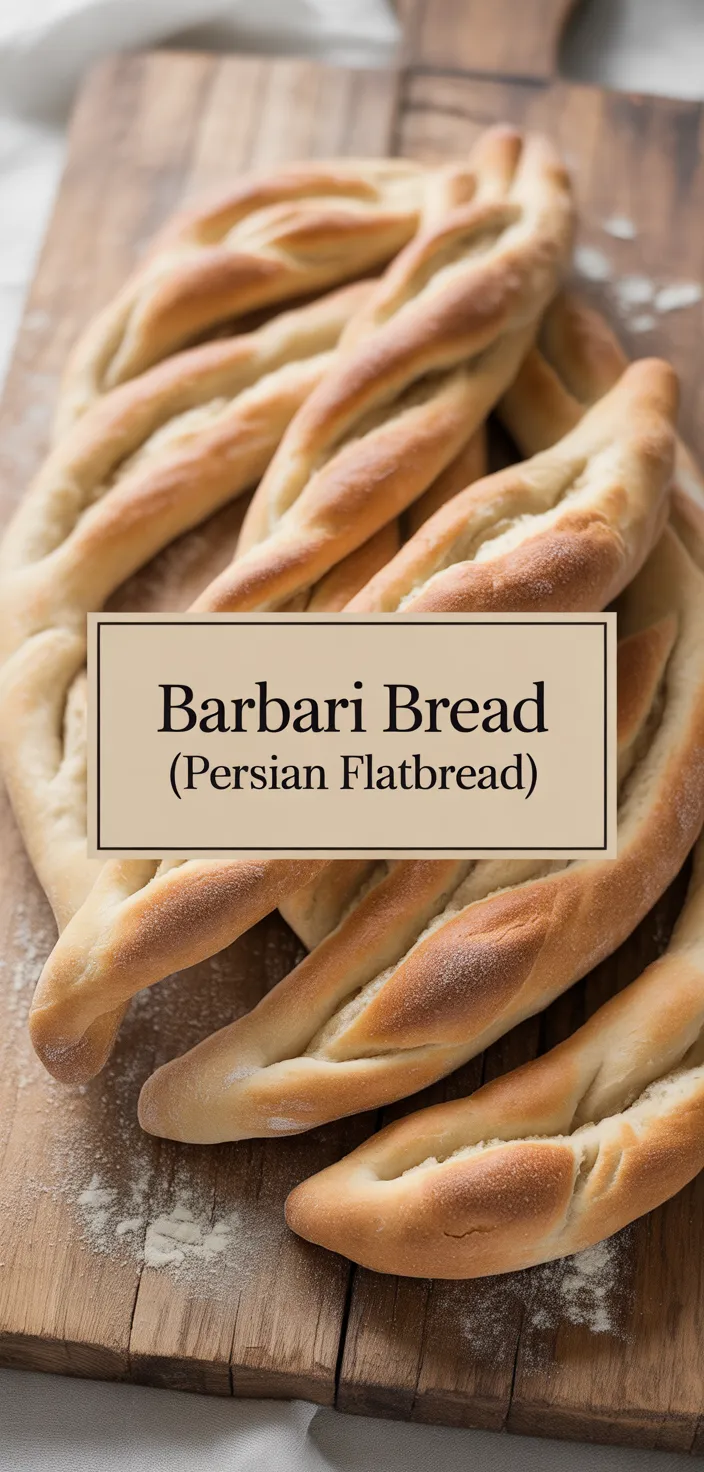
I’m obsessed with Barbari for its glossy, crackled crust and the way Persian Bread snaps then sighs when you tear it. I love that chew, that slight tang under the soft crumb.
I can’t help but daydream about warm strips brushed with olive oil and flecked with nigella, or just torn to dunk into yogurt. This Barbari Bread Recipe feels honest, pure and unapologetic.
I want it for breakfast, lunch, dinner. And yes I’ll take it with tea.
Pure bread lust. No frills.
Just crumb and crunch. I will never stop chasing that torn, sesame-speckled, slightly charred edge anytime, anywhere.
Ingredients
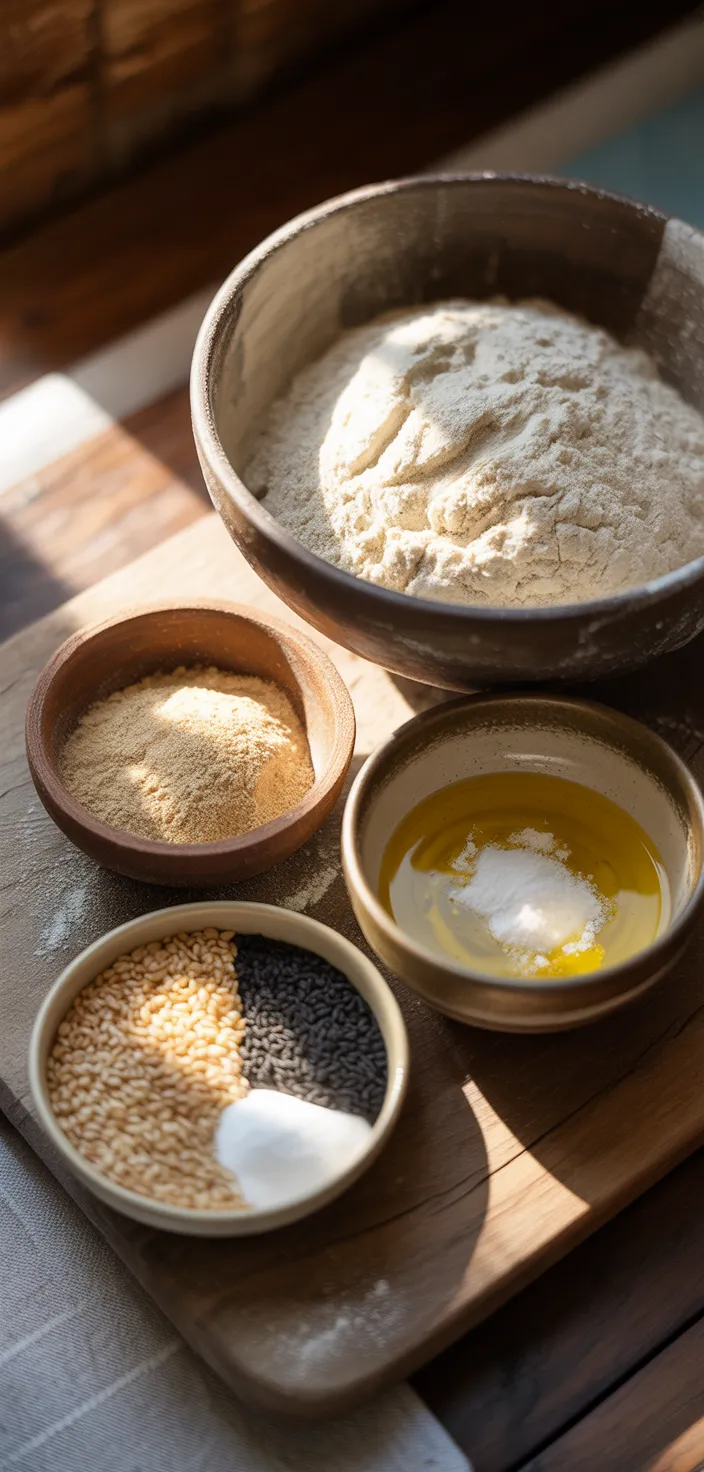
- Flour: The chewy backbone, makes it pillowy and sturdy for tearing.
- Water: Hydrates the dough, keeps it soft — add slowly so it’s right.
- Yeast: Gives lift and mild tang, makes the bread airy and light.
- Sugar or honey: Feeds the yeast, adds tiny sweetness and brown crust color.
- Salt: Brings out flavor, stops it tasting flat and a bit boring.
- Oil for dough: Keeps crumbs tender, makes it less dry and more flexible.
- Oil or butter for brushing: Adds shine, richness and a softer crust.
- Roomal flour: Thickens the gloss, gives that shiny traditional crust finish.
- Roomal water: Thins the paste so it spreads and sticks easily.
- Roomal oil: Gives silkiness to the gloss, helps it crisp just right.
- Roomal salt and sugar: Balances the gloss, keeps it slightly savory-sweet.
- Sesame seeds: Toasty crunch and nuttiness on every bite, classic topping.
- Nigella seeds: Basically peppery, slightly oniony pop, very traditional if you like it.
Ingredient Quantities
- 4 cups (about 500 g) all purpose flour
- 1 to 1 1/2 cups (240 to 360 ml) warm water, add a bit at a time
- 1 packet (2 1/4 tsp / 7 g) active dry yeast, instant will work too
- 1 tbsp granulated sugar or honey
- 2 tsp fine salt
- 2 tbsp vegetable oil or olive oil for the dough
- 2 tbsp olive oil or melted butter for brushing
- For the traditional gloss/paste (roomal): 2 tbsp all purpose flour
- For the roomal (cont): 2 tbsp water
- For the roomal (cont): 2 tbsp vegetable oil
- Pinch of salt and 1 tsp sugar for the roomal paste
- 1 to 2 tbsp sesame seeds for sprinkling
- 1 to 2 tbsp nigella (black cumin) seeds for sprinkling, optional but traditional
How to Make this
1. Proof the yeast: stir 1 packet yeast and 1 tbsp sugar or honey into about 1/2 cup of the warm water (100 to 110 F / 38 to 43 C) and let sit 5 to 10 minutes until foamy. If it doesn’t foam, your yeast might be dead, get new stuff.
2. Make the dough: in a big bowl combine 4 cups (about 500 g) flour and 2 tsp fine salt. Add the foamy yeast, 2 tbsp oil, and most of the remaining warm water (start with 1 cup total water, add more a little at a time until dough is soft and slightly tacky but not soupy). You might use 1 to 1 1/2 cups (240 to 360 ml) total water.
3. Knead: turn onto a lightly floured surface and knead about 8 to 10 minutes until smooth and elastic. You can also use a stand mixer with a dough hook for 6 to 8 minutes. Dough should bounce back when poked.
4. First rise: oil a clean bowl, put the dough in, coat lightly with oil, cover with plastic or a damp towel and let rise in a warm spot until doubled, about 1 to
1.5 hours.
5. Shape: punch dough down, divide into 2 or 3 equal pieces (2 big loaves is classic). Shape each into an oblong 12 to 14 inch loaf on a parchment lined baking sheet or a preheated baking stone. Stretch gently rather than rolling to keep the chew.
6. Make the roomal paste (the gloss): whisk together 2 tbsp flour, 2 tbsp water, 2 tbsp vegetable oil, a pinch of salt and 1 tsp sugar until smooth. It should be a spreadable thick paste, not watery.
7. Create the signature grooves: using your fingertips or the back of a spoon, press long parallel indentations along each loaf, about finger-width apart. These grooves trap the roomal and seeds so don’t skip this.
8. Brush and top: spread a generous layer of the roomal paste over each loaf, pushing it into the grooves. Sprinkle 1 to 2 tbsp sesame seeds and 1 to 2 tbsp nigella (black cumin) seeds over the top, press lightly so they stick.
9. Bake: preheat oven to 475 to 500 F (245 to 260 C). If using a baking stone, preheat it too. Bake the loaves 12 to 18 minutes until the barbari is golden, slightly blistered, and cooked through. Rotate halfway if your oven has hot spots.
10. Finish and serve: brush hot breads with 2 tbsp olive oil or melted butter for extra gloss and softness. Let cool a few minutes, then tear into pieces and serve with cheese, herbs, stews or breakfast. Fresh is best, and leftovers reheat well in a hot oven for a few minutes.
Equipment Needed
1. Large mixing bowl
2. Measuring cups and spoons (and a kitchen scale if you have one)
3. Small bowl or cup for proofing the yeast
4. Wooden spoon or sturdy spatula (or a stand mixer with dough hook if you prefer)
5. Floured work surface and a bench scraper or dough scraper
6. Baking sheet (or a preheated baking stone) and parchment paper
7. Pastry brush for the roomal paste and finishing oil
8. Oven mitts and a cooling rack
9. Kitchen towel or plastic wrap for covering dough
10. Instant‑read thermometer (optional, for checking oven temps and water temp)
FAQ
Barbari Bread (Persian Flatbread) Recipe Substitutions and Variations
- All purpose flour: try 1-to-1 bread flour for chewier crust, or use half whole wheat + half AP for nuttier flavor (dough may need a bit more water).
- Active dry yeast: instant yeast works same amount and can be mixed straight into flour; or use 1 packet (7 g) rapid rise and cut rise time slightly.
- Olive or vegetable oil: swap with melted butter for richer taste, or use avocado oil for neutral flavor and high smoke point.
- Sesame / nigella seeds: sprinkle with poppy seeds, toasted sunflower seeds, or coarse sea salt and zaatar mix if you want a different savory crunch.
Pro Tips
1. Proof the yeast in exactly warm water, not hot or cold — wait, sorry, no em dash. Heat should feel warm to your wrist, about bath temp; if it feels too hot you’ll kill the yeast and too cool it wont wake up, so test it on your wrist before mixing.
2. Add water slowly and judge by feel; the dough should be soft and slightly tacky but not soupy. If you overdo water, dust with flour and knead to bring it back, but it’s easier to add more water than to take it away.
3. Make the roomal paste a bit thicker than you think you need so it stays in the grooves and gives that shiny crust; if it’s too thin it will run off during baking. Press seeds into the paste right after spreading so they stick.
4. Preheat a baking stone or heavy sheet and bake hot and fast. If your oven has hot spots rotate the loaves halfway and brush with oil or butter right out of the oven for extra softness and shine.
Barbari Bread (Persian Flatbread) Recipe
My favorite Barbari Bread (Persian Flatbread) Recipe
Equipment Needed:
1. Large mixing bowl
2. Measuring cups and spoons (and a kitchen scale if you have one)
3. Small bowl or cup for proofing the yeast
4. Wooden spoon or sturdy spatula (or a stand mixer with dough hook if you prefer)
5. Floured work surface and a bench scraper or dough scraper
6. Baking sheet (or a preheated baking stone) and parchment paper
7. Pastry brush for the roomal paste and finishing oil
8. Oven mitts and a cooling rack
9. Kitchen towel or plastic wrap for covering dough
10. Instant‑read thermometer (optional, for checking oven temps and water temp)
Ingredients:
- 4 cups (about 500 g) all purpose flour
- 1 to 1 1/2 cups (240 to 360 ml) warm water, add a bit at a time
- 1 packet (2 1/4 tsp / 7 g) active dry yeast, instant will work too
- 1 tbsp granulated sugar or honey
- 2 tsp fine salt
- 2 tbsp vegetable oil or olive oil for the dough
- 2 tbsp olive oil or melted butter for brushing
- For the traditional gloss/paste (roomal): 2 tbsp all purpose flour
- For the roomal (cont): 2 tbsp water
- For the roomal (cont): 2 tbsp vegetable oil
- Pinch of salt and 1 tsp sugar for the roomal paste
- 1 to 2 tbsp sesame seeds for sprinkling
- 1 to 2 tbsp nigella (black cumin) seeds for sprinkling, optional but traditional
Instructions:
1. Proof the yeast: stir 1 packet yeast and 1 tbsp sugar or honey into about 1/2 cup of the warm water (100 to 110 F / 38 to 43 C) and let sit 5 to 10 minutes until foamy. If it doesn’t foam, your yeast might be dead, get new stuff.
2. Make the dough: in a big bowl combine 4 cups (about 500 g) flour and 2 tsp fine salt. Add the foamy yeast, 2 tbsp oil, and most of the remaining warm water (start with 1 cup total water, add more a little at a time until dough is soft and slightly tacky but not soupy). You might use 1 to 1 1/2 cups (240 to 360 ml) total water.
3. Knead: turn onto a lightly floured surface and knead about 8 to 10 minutes until smooth and elastic. You can also use a stand mixer with a dough hook for 6 to 8 minutes. Dough should bounce back when poked.
4. First rise: oil a clean bowl, put the dough in, coat lightly with oil, cover with plastic or a damp towel and let rise in a warm spot until doubled, about 1 to
1.5 hours.
5. Shape: punch dough down, divide into 2 or 3 equal pieces (2 big loaves is classic). Shape each into an oblong 12 to 14 inch loaf on a parchment lined baking sheet or a preheated baking stone. Stretch gently rather than rolling to keep the chew.
6. Make the roomal paste (the gloss): whisk together 2 tbsp flour, 2 tbsp water, 2 tbsp vegetable oil, a pinch of salt and 1 tsp sugar until smooth. It should be a spreadable thick paste, not watery.
7. Create the signature grooves: using your fingertips or the back of a spoon, press long parallel indentations along each loaf, about finger-width apart. These grooves trap the roomal and seeds so don’t skip this.
8. Brush and top: spread a generous layer of the roomal paste over each loaf, pushing it into the grooves. Sprinkle 1 to 2 tbsp sesame seeds and 1 to 2 tbsp nigella (black cumin) seeds over the top, press lightly so they stick.
9. Bake: preheat oven to 475 to 500 F (245 to 260 C). If using a baking stone, preheat it too. Bake the loaves 12 to 18 minutes until the barbari is golden, slightly blistered, and cooked through. Rotate halfway if your oven has hot spots.
10. Finish and serve: brush hot breads with 2 tbsp olive oil or melted butter for extra gloss and softness. Let cool a few minutes, then tear into pieces and serve with cheese, herbs, stews or breakfast. Fresh is best, and leftovers reheat well in a hot oven for a few minutes.