
I promise this simple white bread delivers a soft, fluffy loaf with a golden crust that looks straight from a bakery. One slice and I bet you’ll wonder why store-bought ever had a spot on your counter.
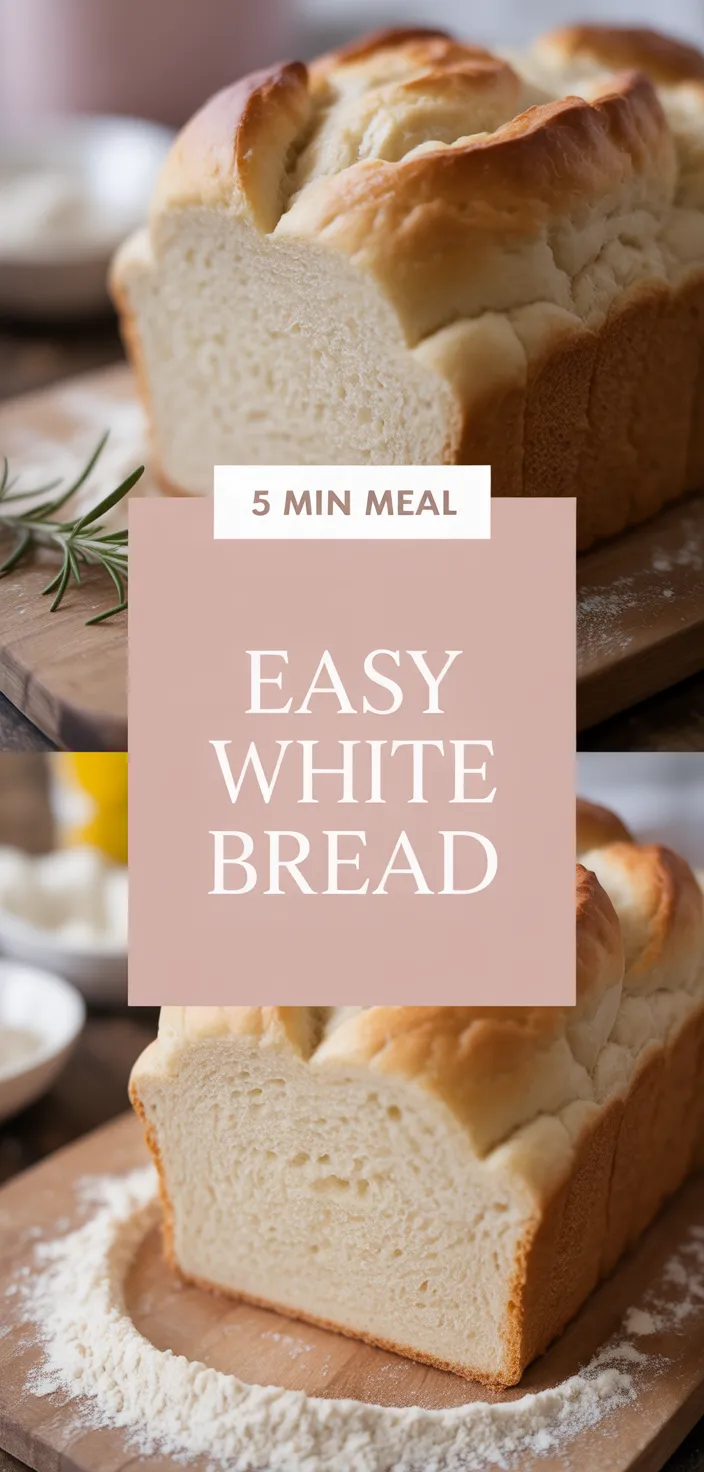
I’m obsessed with this effortless white bread because it gives me that soft, fluffy slice I want without turning my kitchen into a science lab. I love how all purpose flour and active dry yeast turn into a loaf with a tender middle, a lightly chewy crust, and that clean, simple bread flavor I actually crave.
But the best part? I get bread that tastes fresh, real, and way better than the bagged stuff.
Thick slices for butter. Toast that browns like a dream.
And sandwiches that don’t fall apart halfway through lunch. This is my beginner bread, forever.
Honestly.
Ingredients
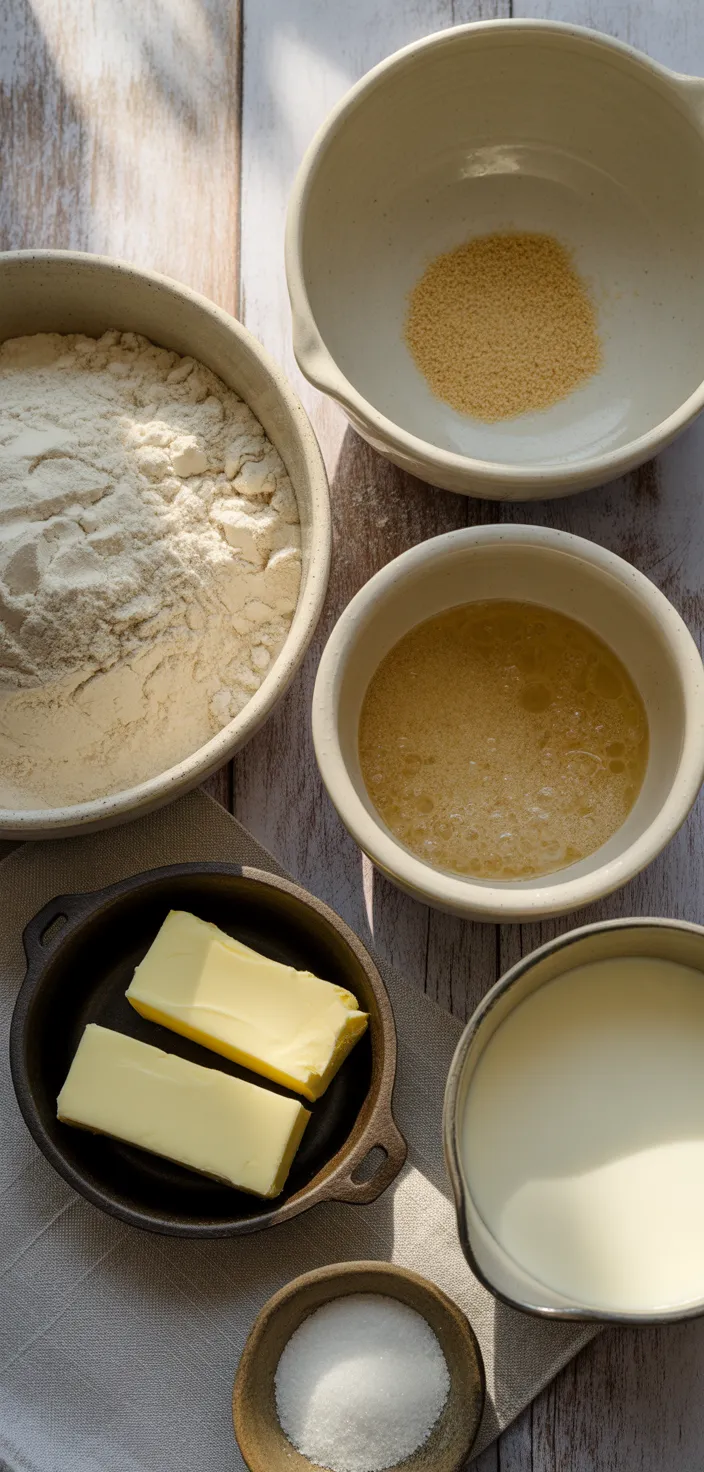
- All-purpose flour is the backbone, giving the bread that soft, familiar sandwich-slice feel.
- Active dry yeast brings the rise, making the loaf light instead of sad and dense.
- Warm water wakes up the yeast, so everything gets moving without much fuss.
- Granulated sugar feeds the yeast and adds just a tiny cozy sweetness.
- Salt keeps the bread from tasting flat, because bland bread is honestly disappointing.
- Melted butter or oil adds tenderness, Plus a little richness in every bite.
- Milk makes the crumb softer, Basically giving you more of that bakery-style texture.
Ingredient Quantities
- All purpose flour 3 cups (about 360 grams)
- Active dry yeast 2 1/4 teaspoons (one packet)
- Warm water 1 cup (about 240 ml)
- Granulated sugar 2 tablespoons
- Salt 1 1/2 teaspoons
- Unsalted butter 2 tablespoons melted or vegetable oil
- Optional 1/4 cup milk at room temperature for a softer crumb
How to Make this
1. Warm the water to about 105 to 115°F (40 to 46°C). Stir in the sugar, sprinkle the active dry yeast over the surface, and let sit 5 to 10 minutes until foamy.
2. In a large bowl combine the all purpose flour and salt. If using milk for a softer crumb, reduce warm water to about 3/4 cup and add 1/4 cup milk at room temperature to the liquid mixture.
3. Add the foamy yeast mixture and the melted butter or oil to the dry ingredients. Stir with a wooden spoon or dough hook until a shaggy dough forms.
4. Turn the dough out onto a lightly floured surface and knead for 8 to 10 minutes until smooth and elastic, or knead in a stand mixer with a dough hook on medium speed for 6 to 8 minutes.
5. Place the kneaded dough in a lightly oiled bowl, turn once to coat, cover with plastic wrap or a damp towel, and let rise in a warm draft free spot until doubled in size, about 1 to 1 1/2 hours.
6. Punch the dough down to release air, turn it out, and gently shape into a loaf by flattening into a rectangle, rolling up tightly, and sealing the seam.
7. Place the shaped loaf seam side down in a greased 9×5 inch loaf pan. Cover and let rise again until puffy and nearly doubled, about 30 to 45 minutes.
8. Meanwhile preheat the oven to 375°F (190°C). If desired, brush the top of the loaf with a little milk or melted butter for a softer, glossy crust.
9. Bake for 25 to 30 minutes until the top is golden brown and the loaf sounds hollow when tapped, or until an instant read thermometer reads about 190 to 200°F (88 to 93°C). Remove from the pan, cool on a wire rack before slicing.
Equipment Needed
1. Liquid and dry measuring cups and measuring spoons
2. Kitchen scale (optional, for weighing flour)
3. Large mixing bowl
4. Small bowl or glass for proofing yeast
5. Wooden spoon or stand mixer with dough hook
6. Lightly floured work surface and bench scraper
7. 9 x 5 inch loaf pan
8. Plastic wrap or clean damp towel
9. Pastry brush and instant read thermometer
10. Wire cooling rack
FAQ
Effortless White Bread Recipe For Beginners Substitutions and Variations
- All purpose flour: substitute with bread flour for chewier texture, or use 100% whole wheat pastry flour for a nuttier, denser loaf (reduce water slightly), or a gluten free 1-to-1 flour blend with 1/2 teaspoon xanthan gum added if the blend lacks it.
- Active dry yeast: substitute instant (rapid) yeast at the same amount, or use 2 teaspoons fresh (cake) yeast dissolved in warm water; for a sour flavor and slower rise use an active sourdough starter (adjust hydration and timing).
- Warm water: swap up to 1/4 cup of the water for warm milk (or use all milk) to give a softer, richer crumb; for dairy-free, use any unsweetened plant milk.
- Unsalted butter: substitute equal amount vegetable oil, melted coconut oil for a slight coconut note, or softened olive oil for a savory twist; if using salted butter, reduce recipe salt slightly.
Pro Tips
1. Warm the water carefully by feel or thermometer; 105 to 115°F works best. Too hot will kill the yeast, too cool and it will be sluggish. If the liquid feels like warm bath water to your wrist, you are in the right zone.
2. Watch the dough more than the clock during kneading. You want a smooth, slightly tacky dough that springs back when poked. If it tears easily, keep kneading; if it sticks to everything, add flour in teaspoon increments.
3. Create a consistent, draft free spot for rising. I warm the oven for a minute, turn it off, then place the covered bowl inside with the oven light on. Even small temperature differences make the rise more reliable.
4. If you want a softer crumb use the optional milk and brush the top with milk or melted butter right after baking for a tender, glossy crust. For a chewier crust skip the post-bake brushing.
5. Let the loaf cool at least 20 to 30 minutes before slicing. Cutting too soon compresses the crumb and makes the bread gummy. A quick tap on the bottom is a good check for doneness if you do not use a thermometer.
Effortless White Bread Recipe For Beginners
My favorite Effortless White Bread Recipe For Beginners
Equipment Needed:
1. Liquid and dry measuring cups and measuring spoons
2. Kitchen scale (optional, for weighing flour)
3. Large mixing bowl
4. Small bowl or glass for proofing yeast
5. Wooden spoon or stand mixer with dough hook
6. Lightly floured work surface and bench scraper
7. 9 x 5 inch loaf pan
8. Plastic wrap or clean damp towel
9. Pastry brush and instant read thermometer
10. Wire cooling rack
Ingredients:
- All purpose flour 3 cups (about 360 grams)
- Active dry yeast 2 1/4 teaspoons (one packet)
- Warm water 1 cup (about 240 ml)
- Granulated sugar 2 tablespoons
- Salt 1 1/2 teaspoons
- Unsalted butter 2 tablespoons melted or vegetable oil
- Optional 1/4 cup milk at room temperature for a softer crumb
Instructions:
1. Warm the water to about 105 to 115°F (40 to 46°C). Stir in the sugar, sprinkle the active dry yeast over the surface, and let sit 5 to 10 minutes until foamy.
2. In a large bowl combine the all purpose flour and salt. If using milk for a softer crumb, reduce warm water to about 3/4 cup and add 1/4 cup milk at room temperature to the liquid mixture.
3. Add the foamy yeast mixture and the melted butter or oil to the dry ingredients. Stir with a wooden spoon or dough hook until a shaggy dough forms.
4. Turn the dough out onto a lightly floured surface and knead for 8 to 10 minutes until smooth and elastic, or knead in a stand mixer with a dough hook on medium speed for 6 to 8 minutes.
5. Place the kneaded dough in a lightly oiled bowl, turn once to coat, cover with plastic wrap or a damp towel, and let rise in a warm draft free spot until doubled in size, about 1 to 1 1/2 hours.
6. Punch the dough down to release air, turn it out, and gently shape into a loaf by flattening into a rectangle, rolling up tightly, and sealing the seam.
7. Place the shaped loaf seam side down in a greased 9×5 inch loaf pan. Cover and let rise again until puffy and nearly doubled, about 30 to 45 minutes.
8. Meanwhile preheat the oven to 375°F (190°C). If desired, brush the top of the loaf with a little milk or melted butter for a softer, glossy crust.
9. Bake for 25 to 30 minutes until the top is golden brown and the loaf sounds hollow when tapped, or until an instant read thermometer reads about 190 to 200°F (88 to 93°C). Remove from the pan, cool on a wire rack before slicing.